
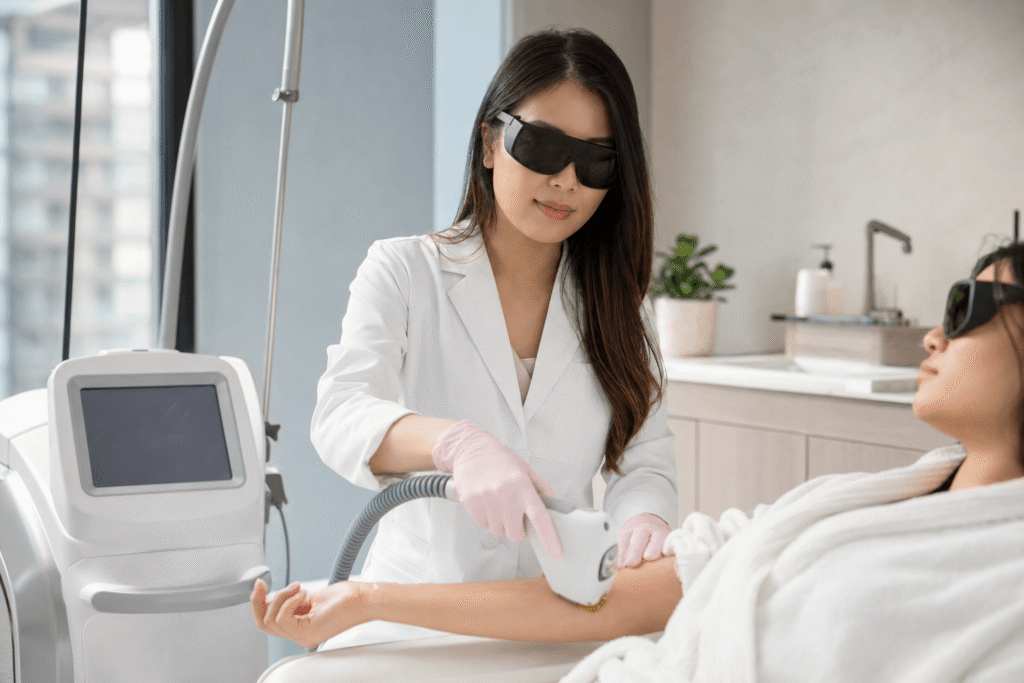
Does laser hair removal hurt? It’s the first question most people ask before booking their first session. The answer isn’t one-size-fits-all. Pain levels vary based on treatment area, skin type, hair thickness, and the laser technology used. Most clients describe the sensation as a quick rubber band snap or a warm pinch, far less intense than waxing, and the discomfort lasts only seconds per pulse.
This guide covers exactly what laser hair removal feels like, how much it hurts across different body areas, factors that influence pain levels, and practical ways to minimize discomfort. You’ll also learn how laser hair removal pain compares to waxing and other hair removal methods, what to expect across multiple sessions, and the safety considerations you need to know before treatment.
Quick Answer
Laser hair removal typically feels like a quick rubber band snap against the skin. Most people tolerate it well without numbing cream. Sensitive areas like the bikini line hurt more, while arms and legs cause minimal discomfort.
What Does Laser Hair Removal Feel Like?
The sensation during laser hair removal is brief and localized. Most clients compare it to a rubber band snapping against the skin, followed by a warm or tingling feeling. The laser targets melanin in the hair follicle, and as the light energy converts to heat, you feel a quick pinch.
The intensity varies. Thin, fine hair on your arms might feel like a slight tingle. Thick, coarse hair on the bikini line produces a sharper sting because there’s more melanin to absorb the laser energy. But each pulse lasts less than a second, and modern lasers fire rapidly, so the entire treatment area gets covered quickly.
Cooling technology makes a significant difference. Many clinics use cryogen cooling systems that spray a cooling burst immediately before and after each laser pulse. This numbs the skin surface and reduces the heat sensation. At Samar Skin Care Clinic in North York, Samar uses advanced cooling technology integrated into the laser handpiece, which delivers continuous cold air throughout the treatment. Clients consistently report that this makes the experience far more comfortable than they expected.
The feeling changes as treatment progresses. During your first session, you’re treating thick, dense hair growth. By the third or fourth session, the hair grows back finer and sparser, which means less melanin to target and less discomfort overall. Many clients find later sessions almost painless compared to their initial treatment.
Key Takeaways
- Expect a quick rubber band snap sensation during each laser pulse
- Choose sensitive areas carefully as bikini line hurts more than legs
- Ask about cooling technology and numbing cream for maximum comfort
- Understand pain decreases with each session as hair becomes finer
- Verify your technician adjusts laser settings based on your pain tolerance
How Much Does Laser Hair Removal Hurt? Pain Levels by Body Area
Pain levels vary dramatically depending on where you’re getting treated. Skin thickness, nerve density, and hair coarseness all play a role. Here’s what to expect across common treatment areas.
Bikini Line and Brazilian Area
The bikini line and Brazilian laser hair removal treatments consistently rank as the most uncomfortable areas. The skin is thin, nerve endings are dense, and the hair is typically thick and coarse. Most clients rate this area between 6 and 8 out of 10 on the pain scale.
The discomfort is sharp but brief. Each pulse stings, and you’ll feel 50 to 100 pulses depending on the treatment area size. The entire session takes 15 to 20 minutes. Many clients request topical numbing cream for Brazilian treatments, especially for their first session.
Pain decreases noticeably by the third treatment. As hair becomes finer and grows in less densely, there’s less melanin for the laser to target. Clients who struggled through their first Brazilian session often report that later sessions feel like a mild annoyance rather than genuine pain.
Face (Upper Lip, Chin, and Full Face)
Facial laser hair removal varies by specific area. The upper lip is one of the most sensitive zones because the skin is thin and nerve density is high. Clients describe it as a sharp snap, but the entire upper lip takes less than two minutes to treat.
The chin is slightly more tolerable. Hair here tends to be coarser, which means more sensation, but the skin is less sensitive than the upper lip. Full face treatments take 10 to 15 minutes and cover the upper lip, chin, jawline, and sometimes the sideburns.
Samar frequently treats facial hair at her facial laser hair removal services in North York. She adjusts the laser fluence and pulse duration for facial skin, which is more delicate than body areas. Clients with darker skin types receive longer wavelengths like the Nd:YAG laser to avoid surface pigmentation while still targeting the hair follicle effectively.
Legs, Arms, Underarms, Back, and Stomach
Legs and arms are among the least painful treatment areas. The skin is thicker, nerve density is lower, and hair is often finer than in other zones. Most clients rate leg and arm treatments between 2 and 4 out of 10 on the pain scale.
Underarm laser hair removal sits in the middle range. The skin is more sensitive than legs, and hair is coarser, but the treatment area is small. Most sessions take less than five minutes. Clients tolerate this area well without numbing cream.
The back and stomach are generally comfortable. Hair density and coarseness vary widely depending on genetics and hormones. Coarse hair on the lower back or abdomen line can feel more intense, but most clients report minimal discomfort across these larger body areas.
If you’re nervous about pain, start with a less sensitive area like your lower legs during your first session. This lets you experience the sensation in a more comfortable zone before moving to areas like the bikini line or face.
Laser Hair Removal vs Waxing, Shaving, and Electrolysis: Pain Comparison
Laser hair removal hurts less than waxing in most cases. Waxing rips hair from the follicle across an entire strip of skin at once, causing prolonged stinging and soreness that lasts for hours. Laser hair removal delivers quick pulses that sting for a fraction of a second, and the discomfort ends immediately after each pulse.
Shaving doesn’t hurt at all, but it’s not a permanent solution. Razor burn, cuts, and stubble are daily annoyances. Laser hair removal requires tolerating discomfort during 6 to 8 sessions, but after that, you’re done. No more daily shaving, no more razor burn, and smooth skin that lasts.
Electrolysis is more painful than laser hair removal for most people. Electrolysis treats one hair follicle at a time with a fine needle that delivers an electrical current. Each insertion feels like a sharp prick, and treating a large area like the legs or back would take dozens of hours. Laser hair removal covers large areas quickly, making it far more practical and less painful overall.
What Factors Affect Pain During Laser Hair Removal
Pain isn’t universal. Several factors determine how much discomfort you’ll experience during treatment.
Skin Type, Hair Thickness, and Melanin Levels
Melanin is the pigment in your hair and skin that absorbs laser energy. Coarse, dark hair contains high melanin levels, which means the laser has more to target. This creates more heat in the hair follicle, which translates to a sharper sensation.
Skin type affects pain indirectly. People with darker skin have melanin in both their hair and their skin. If the laser isn’t calibrated correctly, it can target skin pigment instead of just the hair follicle, causing burns and significant pain. That’s why clinics use the Fitzpatrick scale to assess skin type before treatment.
Samar Skin Care Clinic uses the Fitzpatrick scale during every consultation. Samar evaluates your skin tone and hair color to select the appropriate laser type and settings. For clients with darker skin (Fitzpatrick types IV, V, and VI), she uses longer wavelengths like the Nd:YAG laser, which bypasses surface melanin and targets the deeper hair follicle without causing surface discomfort or pigmentation changes.
Laser Technology: Alexandrite, Diode, and Nd:YAG Lasers
Different lasers produce different levels of discomfort. Alexandrite lasers are fast and effective for lighter skin types, but they can feel more intense because they deliver high energy in a short pulse. Diode lasers penetrate deeper and work well for a broader range of skin tones with moderate discomfort.
Nd:YAG lasers are the safest choice for darker skin, but they require higher energy levels to reach the hair follicle. This can make treatments feel slightly warmer. However, Nd:YAG lasers come with more advanced cooling systems to compensate, making the overall experience comparable to other laser types.
At Samar Skin Care Clinic, Samar selects the laser type based on your Fitzpatrick skin type and hair characteristics. She adjusts the wavelength, fluence, and pulse duration for each client’s unique combination of skin tone, hair color, and pain tolerance. This individualized protocol minimizes discomfort while maximizing results.
How Pain Tolerance Differs by Age and Gender
Pain tolerance varies between individuals based on age, gender, and hormonal factors. Women generally report higher pain sensitivity than men, though pain thresholds fluctuate throughout the menstrual cycle. Many women find treatments more uncomfortable during menstruation when prostaglandins increase pain receptor activity.
Men typically tolerate body treatments well but report higher discomfort during facial hair removal, especially on the beard area where hair is exceptionally coarse. The density of terminal hair in male facial zones means more melanin absorption and increased heat sensation.
Ready to get started?
Book a consultation with Samar to discuss your skin concerns and find the right treatment plan for you.
How to Reduce Pain and Discomfort During Treatment
You don’t have to suffer through laser hair removal. Several strategies can significantly reduce pain and make the experience far more comfortable.
Pre-Treatment Preparation
Avoid caffeine and alcohol before your appointment. Both can increase skin sensitivity and make the treatment feel more intense. Shave the treatment area 24 hours before your session. Long hair absorbs laser energy and can singe, causing a burning smell and unnecessary discomfort. Don’t wax or pluck before laser treatments, as this removes the entire follicle and leaves nothing for the laser to destroy.
Stay hydrated and moisturize your skin in the days leading up to treatment. Dry, dehydrated skin is more sensitive and can crack or flake during the session. Well-hydrated skin tolerates the laser better and heals faster afterward.
Topical Numbing Options and When They Are Recommended
Topical numbing cream is the most effective way to reduce pain during laser hair removal. These creams contain lidocaine or a combination of lidocaine and prilocaine (EMLA cream). Some formulations add tetracaine for enhanced numbing effect.
Apply numbing cream 30 to 60 minutes before your appointment. Spread a thick layer over the treatment area and cover with plastic wrap to enhance absorption. The occlusive barrier increases penetration and maximizes numbing effect. Remove the cream and plastic wrap just before your session begins.
Numbing cream is strongly recommended for highly sensitive areas including the bikini line, Brazilian zone, and upper lip during first sessions. It reduces sensation by 50 to 70 percent, making treatments that would normally be quite painful feel like mild tingling. Most clients don’t need numbing cream for legs, arms, back, or stomach treatments.
Clients with low pain tolerance benefit from numbing cream regardless of treatment area. If you’re anxious about discomfort, using a topical anesthetic for your first session helps you assess your actual pain threshold without unnecessary stress. Many clients discover they don’t need it for subsequent treatments once they’ve experienced the sensation.
Different formulations work better for different skin types. Lidocaine 4% cream works well for most clients. EMLA cream provides deeper numbing for very sensitive areas. BLT cream (benzocaine, lidocaine, and tetracaine) offers the strongest numbing effect but requires a prescription.
Sensitive skin clients should test numbing cream on a small area 24 hours before treatment to check for allergic reactions. Redness, itching, or rash indicates sensitivity to the anesthetic. Samar Skin Care Clinic provides guidance on which numbing products work best for different skin types and where to purchase medical-grade options.
Cooling Technology and Pain Relief During Treatment
Cooling technology built into modern laser systems makes treatments substantially more comfortable. Cryogen cooling sprays a cold burst milliseconds before each laser pulse, numbing the skin and reducing heat sensation. Contact cooling tips on the laser handpiece chill the skin continuously, drawing heat away from the surface.
Take an over-the-counter pain reliever like ibuprofen 30 minutes before your appointment. This reduces inflammation and can lower your overall pain perception, especially for larger treatment areas like full legs or back. Ice packs before and after treatment also help. Applying a cold compress for 10 minutes before your session pre-numbs the skin. Using ice afterward reduces redness, swelling, and residual warmth.
What to Expect: Safety Considerations and Pain Across Treatment Sessions
Pain levels change as you progress through your treatment plan. Understanding what to expect across multiple sessions helps you prepare mentally and physically for the process.
First Session Pain Levels
Your first session is typically the most uncomfortable because you’re treating full, thick hair growth. The hair follicles are dense, and there’s maximum melanin for the laser to target. Clients rate first session pain highest on the discomfort scale, particularly in sensitive areas like the bikini line or upper lip. The sensation is unfamiliar, and anxiety about the unknown can heighten pain perception.
Middle Sessions (Second Through Fourth Treatments)
By your second session, you’ll notice hair growing back finer and sparser. The laser destroyed a percentage of follicles during the first treatment, and the remaining hair grows more slowly. This means less melanin to absorb laser energy and less discomfort during the session. Third and fourth sessions are noticeably more comfortable. Hair density continues to decrease, and the remaining follicles produce thinner hair. Many clients who struggled through their first Brazilian session report that later treatments feel like a mild sting rather than sharp pain.
Final Sessions and Touch-Ups
By your fifth and sixth sessions, pain levels drop significantly. You’re treating only the stubborn follicles that remain active, and the hair is much finer than it was initially. Final touch-up sessions feel almost painless for most clients. The combination of reduced hair density and your increased familiarity with the sensation makes these appointments quick and easy.
Session Intervals and Their Impact on Pain
Most clinics schedule treatments 4 to 6 weeks apart for facial areas and 6 to 8 weeks apart for body areas. This timing matches the hair growth cycle, ensuring you’re treating active follicles. If you wait too long between sessions, hair regrowth increases, and your next treatment might feel more intense. Consistent scheduling maintains lower pain levels throughout your treatment plan.
Safety and What to Expect
Laser hair removal is safe when performed by a trained professional using appropriate laser settings for your skin type. The main safety considerations involve avoiding burns, pigmentation changes, and eye exposure.
Burns occur when the laser energy is too high for your skin type or when the wrong wavelength is used. This is why the Fitzpatrick scale is critical. Clients with darker skin (types IV to VI) need longer wavelengths like Nd:YAG lasers, which bypass surface melanin and target the deeper hair follicle. Using an Alexandrite laser on dark skin can cause surface burns and hyperpigmentation.
Hyperpigmentation and hypopigmentation are temporary in most cases. Hyperpigmentation (darkening) happens when the skin produces excess melanin in response to laser heat. Hypopigmentation (lightening) occurs when the laser damages melanocytes. Both risks are higher in darker skin types and can be minimized by using the correct laser settings and avoiding sun exposure before and after treatment.
Eye protection is mandatory during facial treatments. The laser can damage your retina if it enters your eye. Clinics provide protective goggles or eye shields. Never open your eyes during facial laser treatments, even if you’re wearing goggles.
Contraindications include active skin infections, open wounds, recent sun exposure, and certain medications that increase photosensitivity. Isotretinoin (Accutane) makes your skin more fragile and increases burn risk. You should wait at least six months after stopping Accutane before starting laser hair removal. Pregnancy is a relative contraindication. Most clinics avoid treating pregnant clients due to hormonal changes that can affect hair growth and make treatments less effective.
Samar Skin Care Clinic conducts a thorough consultation before every first treatment. Samar reviews your medical history, medications, skin type, and any previous reactions to laser or light-based treatments. She performs a test spot on a small area to assess your skin’s response before treating larger zones.
Aftercare is straightforward. Avoid hot showers, saunas, and intense exercise for 24 hours after treatment. Apply aloe vera gel or a gentle moisturizer to soothe the skin. Avoid sun exposure and wear SPF 30 or higher on treated areas for at least two weeks. Redness and swelling fade within a few hours to a day. Small bumps or a histamine reaction can occur but resolve quickly.
Is Laser Hair Removal Worth the Discomfort?
For most people, yes. The discomfort during laser hair removal is temporary and manageable. The results are long-lasting and eliminate the daily hassle of shaving, the recurring pain of waxing, and the expense of both over time.
Consider the math. Waxing a Brazilian area costs $60 to $100 per session. If you wax every four to six weeks for 20 years, that’s $15,000 to $30,000 plus hundreds of hours of your time. Laser hair removal costs $1,500 to $3,000 for a full Brazilian treatment plan and takes less than a year to complete.
The pain comparison also favors laser hair removal. Waxing hurts every single time. Laser hair removal hurts during 6 to 8 sessions, and pain decreases with each treatment as hair becomes finer. By your fourth session, most areas feel significantly more comfortable than they did initially.
Clients consistently report that the convenience and confidence gained from smooth, hair-free skin outweigh the temporary discomfort. No more razor burn, no more ingrown hairs, no more last-minute shaving before the beach or a date. The freedom is worth a few minutes of stinging.
Realistic expectations matter. Laser hair removal isn’t completely painless, especially in sensitive areas. But it’s not unbearable either. Most clients tolerate it without numbing cream, and those who do use numbing cream report minimal discomfort. If you can handle a dental cleaning or a tattoo, you can handle laser hair removal.
The long-term benefits make the short-term discomfort trivial. Permanent hair reduction means smoother skin, less maintenance, and more confidence. That’s a trade-off most people are happy to make.
Frequently Asked Questions
How much does laser hair removal hurt?
Laser hair removal feels like a quick rubber band snap against the skin. Pain levels vary by body area, with sensitive zones like the bikini line and upper lip causing more discomfort than legs or arms. Most clients rate the pain between 3 and 7 out of 10, depending on the treatment area.
What does laser hair removal feel like?
The sensation is a brief, sharp snap followed by warmth or tingling. Each laser pulse lasts less than a second. The feeling is more intense in areas with thick, coarse hair like the bikini line or underarms.
Does laser hair removal hurt more on the bikini line than other areas?
Yes, the bikini line and Brazilian area are the most uncomfortable zones for laser hair removal. The skin is thin, nerve endings are dense, and hair is typically thick and coarse. Most clients rate this area between 6 and 8 out of 10 on the pain scale.
Is laser hair removal more painful than waxing?
No, laser hair removal is generally less painful than waxing. Waxing rips hair from the follicle across an entire strip at once, causing prolonged stinging that lasts for hours. Laser hair removal delivers quick pulses that sting for a fraction of a second.
How can I reduce pain during my laser hair removal session?
Apply topical numbing cream 30 to 60 minutes before treatment for sensitive areas. Avoid caffeine and alcohol beforehand. Shave the treatment area 24 hours before your session. Take ibuprofen 30 minutes before your appointment. Choose a clinic with advanced cooling technology.
Laser hair removal offers permanent hair reduction with manageable discomfort. The sensation varies by body area and individual pain tolerance, but modern cooling technology and numbing options make treatments far more comfortable than they were a decade ago. Pain decreases with each session as hair becomes finer, and the long-term benefits of smooth, hair-free skin outweigh the temporary stinging.
At Samar Skin Care Clinic, Samar brings over 10 certifications and specialized training from CNTAA to every treatment. Her approach prioritizes your comfort through advanced cooling systems, individualized laser settings, and thorough pre-treatment consultations. If you’re ready to experience permanent hair reduction with a licensed medical aesthetician who understands pain management, book your consultation today at our North York location on Yonge Street. Call (647) 764-8424 or visit us at 5409 Yonge St, Unit 210 to get started.
