
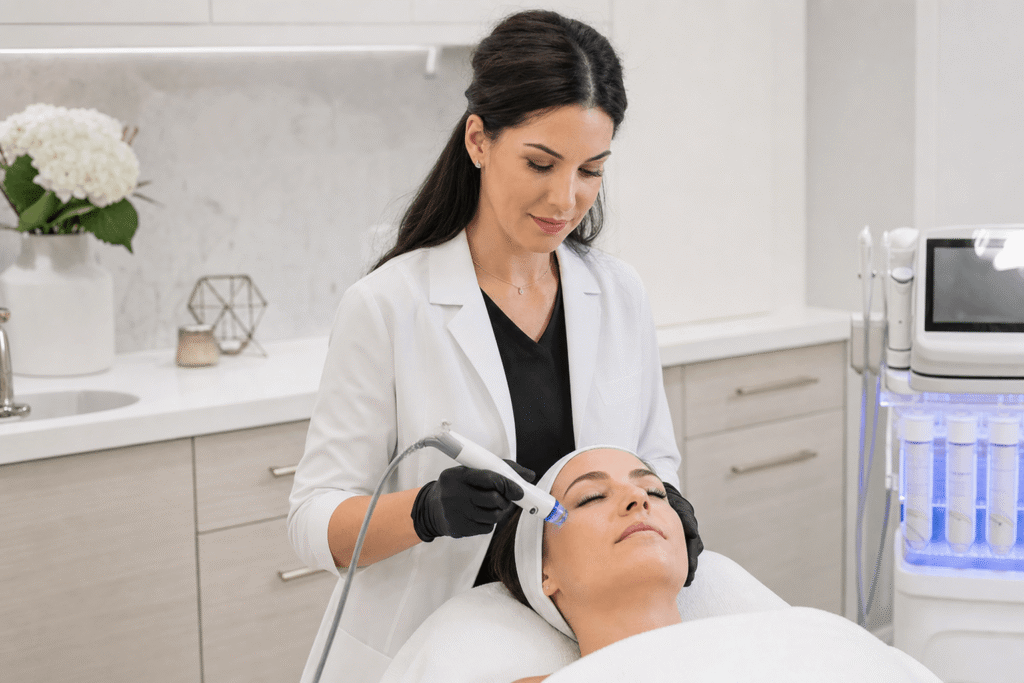
An anti-aging facial is a professional skin treatment designed to reduce visible signs of aging, stimulate collagen production, and restore a youthful appearance. Unlike standard facials that focus on cleansing and hydration, anti-aging facial treatments target specific concerns like fine lines, wrinkles, loss of firmness, and uneven skin tone through medical-grade ingredients and advanced techniques.
This guide explains how professional anti-aging facials work, what makes them different from regular spa treatments, and what you can realistically expect from these age-defying procedures.
Quick Answer
An anti-aging facial is a professional treatment that uses medical-grade ingredients like retinol, peptides, and hyaluronic acid combined with techniques such as chemical peels, microdermabrasion, and LED light therapy to reduce wrinkles, boost collagen, and restore youthful skin texture and tone.
What Is an Anti-Aging Facial?
An anti-aging facial is a targeted skin treatment that addresses the biological processes responsible for visible aging. These specialized facials go beyond surface-level cleansing to penetrate deeper skin layers where collagen degradation, cellular turnover slowdown, and oxidative stress occur.
The treatment combines several elements. First, deep exfoliation removes dead skin cells that make skin look dull and accentuate fine lines. Second, active ingredient infusion delivers concentrated serums containing retinol, peptides, vitamin C, and growth factors directly into the dermis. Third, stimulation techniques like massage, microcurrent, or LED therapy activate cellular repair mechanisms.
What sets these facials apart is their focus on measurable cellular changes rather than temporary cosmetic improvements. While a regular facial might make your skin glow for a day or two, an anti-aging facial treatment initiates processes that continue working for weeks after your appointment.
At Samar Skin Care Clinic in North York, anti-aging facial protocols are customized based on skin analysis that evaluates collagen density, pigmentation patterns, and elasticity loss. Samar, a Licensed Medical Aesthetician who graduated from CNTAA in 2020, designs treatment plans that address each client’s specific aging concerns rather than following a one-size-fits-all approach.
Key Takeaways
- Choose medical-grade facials over spa versions for deeper ingredient penetration
- Expect visible improvements in texture within two to four weeks
- Start preventive treatments in your 30s for long-term aging resistance
- Combine facials with complementary procedures for comprehensive rejuvenation
- Verify your aesthetician holds proper medical certifications and advanced training
How Anti-Aging Facials Work to Reverse Signs of Aging
Anti-aging facials work by targeting the four primary mechanisms of skin aging: collagen breakdown, decreased cellular turnover, oxidative damage, and moisture barrier deterioration. Each treatment step addresses at least one of these pathways.
Collagen stimulation happens through controlled skin injury and growth factor delivery. Chemical peels create micro-wounds that trigger the body’s repair response, flooding the area with fresh collagen and elastin. Peptide serums signal fibroblasts to increase production even without injury.
Cellular turnover acceleration comes from exfoliating acids and retinoids. Young skin naturally sheds dead cells every 28 days, but this slows to 40-50 days by your 40s. Glycolic acid and retinol reset this cycle, revealing fresher skin and preventing the buildup that emphasizes wrinkles. Antioxidant infusion neutralizes free radicals that damage cellular DNA and break down collagen, while hydration restoration through hyaluronic acid and ceramides plumps skin from within.
When clients combine their anti-aging facial with microdermabrasion treatments, we often see faster visible improvements because the mechanical exfoliation enhances product penetration by up to 40%. This pairing works especially well for stubborn texture concerns around the mouth and forehead.
Key Ingredients in Professional Anti-Aging Facials
Professional anti-aging facials rely on clinically-proven ingredients that work synergistically to combat multiple aging pathways. Retinol stands as the gold standard for cellular turnover and collagen stimulation, with medical-grade facials using concentrations between 0.5% and 2%.
Vitamin C in the form of L-ascorbic acid provides dual benefits. It neutralizes free radicals that accelerate aging while also serving as a cofactor in collagen synthesis. Hyaluronic acid in professional treatments comes in multiple molecular weights. Low-weight molecules penetrate deeply to hydrate from within, while high-weight molecules sit on the surface to create an immediate plumping effect.
Peptides function as cellular messengers that tell skin to behave younger. Matrixyl and Argireline signal increased collagen production and muscle relaxation respectively. When applied during a facial with proper penetration techniques like ultrasound or iontophoresis, they reach the cellular targets that respond to these signals.
Medical-Grade vs. Spa Anti-Aging Facials: Key Differences
The distinction between medical-grade and spa facials significantly impacts both results and safety. Product concentration represents the most obvious divide. Medical facilities use prescription-strength retinoids, higher-percentage chemical peels, and pharmaceutical-grade peptides. Penetration depth differs substantially, with medical aestheticians employing technologies like ultrasound and microcurrent that drive ingredients into the viable epidermis and dermis.
Practitioner qualifications matter for both safety and efficacy. Licensed Medical Aestheticians like Samar complete rigorous training in skin physiology, contraindications, and emergency protocols. This education allows proper assessment of skin conditions and adjustment of treatment parameters for different skin types and sensitivities.
| Factor | Medical-Grade Facial | Spa Facial |
|---|---|---|
| Active Concentration | Prescription strength (0.5-2% retinol) | Cosmetic grade (0.1-0.5% retinol) |
| Penetration Technology | Ultrasound, microcurrent, medical lasers | Manual application, steam |
| Practitioner Credential | Licensed Medical Aesthetician | Licensed Esthetician |
| Results Timeline | Visible changes in 2-4 weeks | Immediate glow, minimal lasting change |
| Treatment Depth | Dermis (deep layers) | Epidermis (surface layers) |
When to Start Anti-Aging Facials: Age-Specific Recommendations
Timing your entry into anti-aging treatments affects both immediate results and long-term skin health. The ideal starting point varies based on genetics, lifestyle factors, and existing damage.
Starting Anti-Aging Facials in Your 30s
Your 30s mark the prevention phase. Collagen production decreases about 1% annually starting around age 25, making this the ideal time to slow that decline before significant visible changes appear. Monthly facials using gentle chemical peels, vitamin C infusions, and hydrating peptides establish good habits without over-treating young skin. The goal is preserving what you have rather than aggressively correcting damage.
Anti-Aging Facials in Your 40s
Your 40s shift toward correction and maintenance. Visible changes like nasolabial folds, crow’s feet, and uneven tone require more aggressive treatment protocols. Bi-weekly facials during intensive phases, followed by monthly maintenance, become standard recommendations. Stronger active concentrations deliver the cellular changes needed to reverse early to moderate aging. Retinol increases to 1-1.5%, chemical peels reach 40-50% concentrations, and treatments may incorporate microneedling to boost collagen induction.
Anti-Aging Facials in Your 50s and Beyond
The 50s and beyond require comprehensive, aggressive protocols since hormonal changes from menopause accelerate collagen loss and thinning. Treatment frequency often increases to every 3-4 weeks with medical-grade products at maximum safe concentrations. Growth factors and stem cell serums become more prominent in treatment plans. While significant improvements are absolutely achievable, facials work best as part of a broader aesthetic plan that may include injectables and laser resurfacing.
What to Expect During an Anti-Aging Facial Treatment
A professional anti-aging facial typically takes 60 to 90 minutes from start to finish. The session begins with thorough cleansing and skin analysis under magnification to identify specific concerns like sun damage, dehydration patterns, and areas of collagen loss.
Exfoliation comes next, often through chemical means rather than physical scrubbing. A glycolic acid peel or enzyme treatment dissolves dead skin cells and preps the skin for maximum product absorption. Serum application represents the core treatment phase. Multiple products get layered in a specific order: antioxidants first, then peptides, followed by hydrators. Advanced techniques like ultrasonic infusion or LED light therapy enhance penetration and amplify cellular responses.
Massage stimulates lymphatic drainage and increases circulation, bringing oxygen and nutrients to aging skin. The treatment concludes with moisturizer and broad-spectrum SPF application. Immediately after treatment, expect some redness similar to a mild sunburn. This typically fades within 2-4 hours. Slight flaking may occur 2-3 days post-treatment as cellular turnover accelerates.
Ready to get started?
Book a consultation with Samar to discuss your skin concerns and find the right treatment plan for you.
Before and After Care for Anti-Aging Facials
Proper preparation and post-treatment care significantly influence both results and comfort. Following specific guidelines maximizes the benefits of professional anti-aging facials while minimizing potential complications.
Before Your Treatment: Preparation Steps
Discontinue active ingredients for 48-72 hours before your appointment. Stop using retinol, glycolic acid, and other exfoliants to prevent over-sensitization when combined with the professional treatment. If you are on prescription retinoids like tretinoin, discuss timing with your aesthetician as you may need to pause for up to a week.
Avoid sun exposure and tanning beds for at least 72 hours pre-treatment. Recently tanned or sunburned skin cannot safely tolerate the active ingredients and techniques used in anti-aging facials. Arrive with a clean face, though makeup is fine since thorough cleansing is part of the protocol. Inform your aesthetician about any new medications, skin sensitivities, or recent procedures.
After Your Treatment: Maximizing Results
Immediately after treatment, your skin enters a heightened sensitivity period lasting 3-7 days. During this window, avoid hot water, steam rooms, saunas, and intense exercise that causes heavy sweating. Heat dilates blood vessels and can intensify redness or cause broken capillaries in just-treated skin.
Sun protection becomes absolutely critical. Apply broad-spectrum SPF 30 or higher every two hours when outdoors since active ingredients increase photosensitivity by up to 50%. Many anti-aging benefits are lost if you develop sun damage during the recovery period.
Skip active ingredients in your home routine for 3-5 days post-treatment. Your skin is already working hard to process the professional-grade products, and adding more actives causes unnecessary irritation. Return to your regular retinol and acids only when any flaking or sensitivity has completely resolved.
Hydration supports the healing and rebuilding process. Gentle, fragrance-free moisturizers applied 2-3 times daily keep the barrier intact while cellular turnover accelerates. Look for formulas with ceramides and hyaluronic acid that support rather than challenge recovering skin.
What to Avoid After Your Facial
Avoid picking at any flaking or peeling skin, as this can cause scarring and hyperpigmentation. Do not use harsh scrubs, washcloths, or exfoliating devices for at least one week. Skip makeup for 12-24 hours if possible to let your skin breathe and fully absorb the professional products.
Avoid swimming pools and hot tubs for 48 hours due to chlorine and bacteria exposure on sensitized skin. Do not schedule other facial treatments, waxing, or laser procedures for at least two weeks to prevent over-treatment complications. Avoid alcohol-based toners and fragranced products that can irritate sensitive post-treatment skin.
At Samar Skin Care Clinic, clients receive a customized aftercare sheet specific to their treatment and skin type. This includes recommended products and clear instructions on when to resume various home care steps.
We schedule anti-aging facials at least five days before important events. While some clients see immediate glow, others experience temporary purging or flaking as the treatment accelerates cell turnover. This buffer ensures you look your absolute best when it matters most.
Combining Anti-Aging Facials with Other Aesthetic Treatments
Anti-aging facials deliver significant improvements on their own, but strategic combinations with complementary procedures create synergistic effects that surpass what any single treatment achieves. Understanding how to pair treatments maximizes your investment and accelerates visible results.
Comprehensive Combination Treatment Protocols
Combination treatment protocols strategically sequence multiple modalities to address different aging mechanisms simultaneously. The most effective protocols layer treatments that work at different skin depths. Surface treatments like chemical peels prepare skin for deeper procedures, while recovery-phase treatments support healing and maximize results.
A typical comprehensive protocol might begin with a series of anti-aging facials to optimize skin health and barrier function. Once the skin shows improved resilience, deeper treatments like laser resurfacing or aggressive chemical peels can be introduced safely. Following these intensive procedures, maintenance facials continue delivering nutrients and growth factors that support the prolonged collagen remodeling process.
Timing between treatments matters significantly. Schedule facials 7-14 days after intensive procedures like ablative lasers to support healing. For non-ablative treatments and injectables, facials can be performed within 3-5 days. Monthly maintenance facials between quarterly intensive treatments maintain momentum and prevent backsliding.
Microdermabrasion and Chemical Peel Combinations
Pairing microdermabrasion with anti-aging facials creates enhanced exfoliation and penetration. The mechanical exfoliation removes the outermost dead cell layer, allowing chemical exfoliants and serums applied during the facial to penetrate up to 40% more effectively. This combination works exceptionally well for textural concerns, enlarged pores, and superficial pigmentation.
Microneedling and Growth Factor Protocols
Combining microneedling with specialized facials amplifies collagen induction. The microneedling session creates thousands of micro-channels that trigger intense healing responses. Following this with a facial 2-3 weeks later delivers concentrated peptides, growth factors, and stem cell serums to the actively rebuilding tissue, significantly enhancing the regenerative outcome.
Injectable and Skin Quality Pairing
Combining injectables like Botox and dermal fillers with anti-aging facials addresses both volume loss and skin quality. Neuromodulators relax muscles that create dynamic wrinkles, while facials improve the texture and tone of the overlying skin. Fillers restore structural volume, and facials ensure the skin covering that restored volume looks healthy and radiant. Schedule facials one week before injectable appointments for optimal results.
LED and Laser Therapy Integration
Integrating LED light therapy into facial protocols enhances cellular energy production without adding recovery time. Red light stimulates fibroblasts to produce more collagen, while near-infrared light penetrates deeper to support healing. When combined with laser treatments, LED therapy accelerates recovery and amplifies collagen remodeling.
At Samar Skin Care Clinic, comprehensive consultations map out 6-12 month treatment plans that strategically combine modalities. Samar evaluates your specific aging patterns, skin type, budget, and timeline to recommend the most effective combination protocol for your goals, ensuring each treatment builds on the previous one for compounding improvements.
Frequently Asked Questions About Anti-Aging Facials
What is an anti-aging facial and how does it differ from regular facials?
An anti-aging facial is a professional treatment that uses medical-grade ingredients like retinol, peptides, and vitamin C combined with advanced techniques such as chemical peels and LED therapy. Unlike regular facials that focus on cleansing and temporary glow, anti-aging facials penetrate deeper skin layers to stimulate collagen, accelerate cellular turnover, and create measurable biological changes that continue working for weeks after treatment.
How often should I get an anti-aging facial for best results?
Treatment frequency depends on your age and skin condition. For prevention in your 30s, monthly facials maintain healthy function. Corrective treatment in your 40s often requires bi-weekly sessions initially, then monthly maintenance. Clients in their 50s and beyond typically benefit from treatments every 3-4 weeks. Most people see optimal results with consistent monthly treatments after an initial series.
Are anti-aging facials safe for sensitive skin?
Yes, but protocols must be customized for sensitive skin types. A qualified medical aesthetician adjusts product concentrations, avoids certain ingredients, and uses gentler techniques to prevent irritation. Patch testing before your first treatment identifies potential reactions. Sensitive skin often requires lower-strength retinol, enzyme peels instead of acid peels, and extra barrier support with ceramides and soothing ingredients.
How long do results from anti-aging facials last?
Immediate effects like glow last 3-7 days. Deeper cellular changes including increased collagen and improved texture become visible within 2-4 weeks and can last 6-12 weeks from a single treatment. However, aging continues, so results gradually diminish without maintenance. Consistent monthly treatments create cumulative improvements that build over time.
Can I combine anti-aging facials with Botox or fillers?
Yes, combining anti-aging facials with injectables creates comprehensive rejuvenation. Schedule facials one week before injectable appointments to ensure optimal skin condition. After injectables, wait 1-2 weeks before resuming facials to allow products to settle. This combination addresses both muscle movement and skin quality for more natural, balanced results than either treatment alone.
Choose Professional Anti-Aging Facials for Lasting Results
Anti-aging facials represent a scientifically-grounded approach to slowing and partially reversing visible skin aging when administered by qualified professionals using medical-grade products and technologies. The difference between spa-level treatments and medical aesthetics comes down to active ingredient concentrations, penetration depth, practitioner expertise, and measurable biological outcomes.
Whether you are starting prevention in your 30s or addressing established concerns in your 50s and beyond, customized treatment protocols deliver the cellular changes necessary for real improvement. Samar brings both her Licensed Medical Aesthetician credentials and extensive advanced training to each consultation, designing facial protocols that match your specific aging patterns, skin type, and aesthetic goals rather than following generic templates.
Ready to experience professional anti-aging facials tailored to your unique skin concerns? Book a consultation at Samar Skin Care Clinic’s North York location at 5409 Yonge St, Unit 210, or call (647) 764-8424 to discuss how customized anti-aging treatments can help you achieve and maintain healthier, more youthful-looking skin.
