
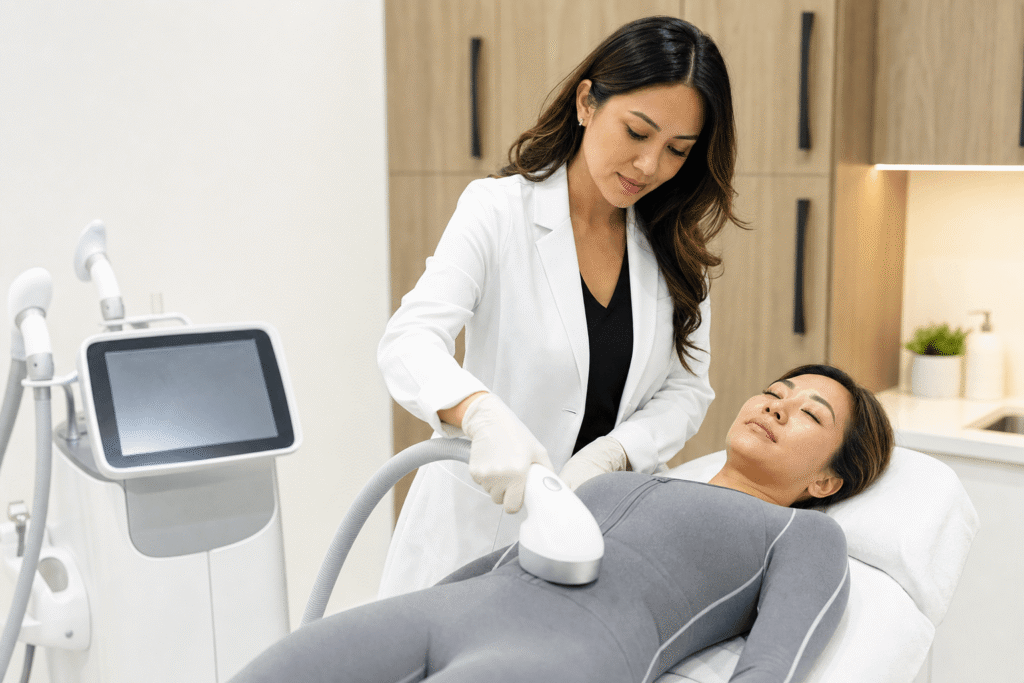
Body contouring is a category of aesthetic treatments designed to reshape and refine specific areas of the body by removing excess fat, tightening loose skin, or both. These procedures range from non-invasive technologies like cryolipolysis and radiofrequency to surgical interventions such as liposuction and abdominoplasty. Whether you’re addressing stubborn fat deposits that resist diet and exercise or loose skin following significant weight loss, body contouring offers targeted solutions tailored to your goals and body type.
This guide explains the fundamental principles of body contouring, breaks down the differences between surgical and non-surgical approaches, and helps you understand which option aligns with your timeline, budget, and desired outcome. You’ll also learn about candidacy requirements, realistic recovery expectations, and how to maintain results long-term.
Quick Answer
Body contouring encompasses surgical and non-surgical treatments that reshape the body by removing fat, tightening skin, or both. Non-surgical methods use technologies like cryolipolysis, laser, and radiofrequency with minimal downtime, while surgical procedures like liposuction provide more dramatic, immediate results.
What Is Body Contouring? Definition and Overview
Body contouring refers to a broad range of medical and aesthetic procedures that alter the shape and appearance of the body. The term covers two distinct categories: surgical body contouring, which involves invasive techniques performed by plastic surgeons, and non-surgical body contouring, which uses energy-based devices to target fat cells and stimulate collagen production without incisions.
Surgical body contouring procedures include liposuction, tummy tucks, and body lifts. These treatments physically remove fat tissue and excess skin, delivering immediate and often dramatic changes. They require anesthesia, involve incisions, and come with recovery periods ranging from several weeks to months depending on the procedure’s extent.
Non-surgical body contouring relies on technologies such as cryolipolysis (controlled cooling), laser lipolysis (heat-based fat destruction), radiofrequency (deep tissue heating), and injection lipolysis (fat-dissolving injections). These methods work by damaging fat cells, which the body then eliminates naturally over weeks or months. Results appear gradually and typically require multiple treatment sessions.
Key Takeaways
- Choose surgical options for significant fat removal and immediate results
- Expect gradual changes with non-surgical methods over several treatment sessions
- Verify candidacy requirements before committing to any body contouring procedure
- Budget for maintenance treatments to preserve non-surgical body contouring results
- Ask about realistic timelines based on your specific body composition
Types of Body Contouring: Surgical vs Non-Surgical Options
The fundamental difference between surgical and non-surgical body contouring lies in mechanism, invasiveness, and result timeline. Surgical procedures physically remove fat and tissue through incisions. Non-surgical treatments trigger biological processes that gradually eliminate fat cells or tighten skin without cutting.
Surgical body sculpting delivers immediate, visible change. When a plastic surgeon performs liposuction, fat cells are suctioned out during the procedure. You leave the operating room with those cells permanently removed, though swelling initially masks the final result. This immediacy makes surgical options ideal for larger treatment areas or when excess skin must also be addressed.
Non-surgical body contouring works through delayed cellular response. Cryolipolysis freezes fat cells, causing crystallization that triggers apoptosis (programmed cell death). Your lymphatic system then processes and eliminates these damaged cells over 8 to 12 weeks. Similarly, radiofrequency energy heats deep tissue layers to denature fat cells and stimulate new collagen formation, with results emerging over several months as your body completes this remodeling process.
Recovery requirements differ substantially. Surgical procedures typically require 2 to 6 weeks away from strenuous activity, prescription pain management, compression garments, and follow-up visits to monitor healing. Non-surgical treatments usually involve minimal to no downtime. Most clients at Samar Skin Care Clinic in North York return to work immediately after professional body contouring treatments, though temporary redness, numbness, or mild swelling may occur in the treated area.
At Samar Skin Care Clinic in North York, Samar assesses skin laxity using the pinch test during consultations. If pinched skin snaps back quickly, non-surgical methods work well. If it remains tented, surgical options may provide better outcomes for that specific area.
Non-Surgical Body Contouring Methods
Non-surgical body contouring has evolved rapidly over the past decade, offering multiple technology platforms that target fat reduction, skin tightening, or both. Each method uses a different energy modality to achieve results without incisions.
Cryolipolysis (Fat Freezing)
Cryolipolysis applies controlled cooling to subcutaneous fat layers, lowering tissue temperature to a point where fat cells undergo apoptosis while surrounding skin, nerves, and muscle remain unharmed. During treatment, a vacuum applicator draws the targeted area into a cooling panel. Treatment duration ranges from 35 to 75 minutes per area. Studies show cryolipolysis typically achieves fat layer reduction of 20 to 25 percent in treated areas after a single session, with results becoming visible at 3 weeks and maximizing by 8 to 12 weeks post-treatment.
Radiofrequency and Laser Treatments
Radiofrequency lipolysis delivers electromagnetic energy that heats tissue in controlled patterns. Advanced systems like EXION use a combination of radiofrequency with targeted ultrasound to reach deeper fat layers while simultaneously tightening overlying skin. At Samar Skin Care Clinic, Toronto-area clients often prefer non-surgical skin tightening options when addressing post-pregnancy abdominal changes or age-related tissue relaxation in the arms and thighs. Radiofrequency treatments typically require 4 to 8 sessions for optimal results, scheduled weekly or biweekly. Results emerge gradually as treated fat cells are eliminated and collagen remodeling occurs over 12 to 16 weeks following the final session.
Ready to get started?
Book a consultation with Samar to discuss your skin concerns and find the right treatment plan for you.
Surgical Body Contouring Procedures
Surgical body contouring provides more dramatic and immediate results than non-surgical alternatives, making it the preferred choice for patients with larger volumes of excess fat or significant skin laxity. These procedures require anesthesia, involve surgical incisions, and demand substantial recovery time, but deliver transformative outcomes in a single operation.
Liposuction
Liposuction remains the most performed cosmetic surgical procedure worldwide. The technique involves inserting a thin tube (cannula) through small incisions, then using suction to physically remove fat cells from targeted areas. Modern liposuction techniques include tumescent (fluid injection for easier fat removal), ultrasound-assisted (sound waves liquefy fat first), and laser-assisted (heat liquefies fat and may tighten skin) variations. Surgeons can treat multiple body areas in a single session, commonly addressing the abdomen, flanks, thighs, arms, back, and neck. Fat removed through liposuction is permanently eliminated. In most adults, new fat cells are not typically generated, though remaining fat cells can still enlarge if significant weight gain occurs post-procedure.
Abdominoplasty and Body Lifts
Abdominoplasty (tummy tuck) addresses both excess abdominal fat and loose skin, particularly beneficial after pregnancy or massive weight loss. The procedure removes skin and fat from the lower abdomen while tightening separated abdominal muscles (diastasis recti). Surgeons create an incision from hip to hip just above the pubic area, remove excess tissue, and reposition the remaining skin for a flatter, firmer abdomen. Body lifts address circumferential skin laxity, removing excess skin around the entire torso, thighs, or arms. A lower body lift treats abdomen, buttocks, hips, and outer thighs in one operation.
Who Is a Good Candidate for Body Contouring?
Not everyone qualifies as an ideal candidate for body contouring, and candidacy requirements differ between surgical and non-surgical approaches. Understanding these criteria helps set realistic expectations and improves outcome satisfaction.
The best candidates for non-surgical body contouring are at or near their goal weight with isolated areas of stubborn fat that resist diet and exercise. Body mass index (BMI) typically should fall below 30, as non-surgical technologies work best on pinchable fat layers between 1 and 3 centimeters thick. These methods reduce fat volume but don’t eliminate large amounts or address significant skin laxity.
Good candidates maintain stable weight. Someone actively losing or frequently fluctuating in weight should postpone body contouring until achieving a consistent weight for at least 3 to 6 months. Results depend on the body eliminating damaged fat cells naturally, a process that weight changes can obscure or reverse.
Realistic expectations separate satisfied clients from disappointed ones. Non-surgical body contouring produces subtle to moderate changes, not dramatic transformations. A typical treatment series might reduce waist circumference by 1 to 3 inches total, not dress sizes. Clients seeking significant size reduction or those with substantial amounts of fat to lose should consider surgical options or focus on weight loss first.
Surgical body contouring candidates typically have completed major weight loss, whether through lifestyle changes or bariatric surgery, and have maintained stable weight for 6 to 12 months. They possess good skin elasticity, don’t smoke (or commit to quitting 4 to 6 weeks before and after surgery), and have realistic expectations about scarring and recovery requirements.
Medical conditions affect candidacy for both approaches. Active infections, autoimmune disorders affecting healing, uncontrolled diabetes, heart conditions, and clotting disorders require medical clearance or may contraindicate treatment entirely. Pregnancy or breastfeeding disqualifies candidates until several months postpartum.
At Samar Skin Care Clinic in North York, Samar conducts thorough consultations assessing medical history, treatment goals, and physical examination findings before recommending specific body contouring approaches.
Benefits, Risks, and What to Expect from Body Contouring
Body contouring offers specific benefits that extend beyond aesthetic improvement, but also carries inherent risks that vary by treatment type. Understanding both sides helps you make an informed decision aligned with your priorities and risk tolerance.
The primary benefit is targeted body reshaping in areas resistant to conventional weight loss methods. Many people find that despite consistent exercise and healthy eating, certain fat deposits persist. The lower abdomen, love handles, inner thighs, and upper arms commonly hold onto fat due to genetic fat distribution patterns. Body contouring specifically addresses these stubborn zones.
Non-surgical methods offer the benefit of minimal disruption to daily life. Most clients return to work the same day, experience minimal discomfort managed with over-the-counter medications, and avoid visible scarring. Surgical body contouring provides more comprehensive transformation, removing larger fat volumes and addressing skin laxity simultaneously. For post-weight loss patients with hanging skin, surgical intervention remains the only effective solution.
Psychological benefits often accompany physical changes. Research documents improved body image, self-confidence, and quality of life following body contouring procedures. Clients report feeling more comfortable in fitted clothing and experiencing reduced self-consciousness about specific body areas.
Risks for non-surgical body contouring include temporary side effects like redness, swelling, bruising, numbness, and tenderness lasting days to weeks. More serious but rare complications include burns from heat-based devices, frostbite or nerve damage from cryolipolysis, and paradoxical fat increase. Uneven results or minimal visible change represent the most common disappointments.
Surgical body contouring carries standard surgical risks: infection, bleeding, adverse anesthesia reactions, blood clots, and poor wound healing. Procedure-specific complications include contour irregularities, asymmetry, persistent numbness, fluid accumulation requiring drainage, and visible scarring. Serious complications like pulmonary embolism or fat embolism, though rare, can be life-threatening.
| Treatment Type | Typical Downtime | Sessions Needed | Results Visible | Results Finalized |
|---|---|---|---|---|
| Cryolipolysis | None to 1 day | 1-3 per area | 3 weeks | 8-12 weeks |
| Radiofrequency | None | 4-8 sessions | 4-6 weeks | 12-16 weeks |
| Liposuction | 3-7 days | 1 session | Immediate (masked by swelling) | 3-6 months |
| Abdominoplasty | 2-4 weeks | 1 session | Immediate (masked by swelling) | 6-12 months |
Recovery Time and Realistic Timeline for Results
Recovery and result timelines vary dramatically based on whether you choose surgical or non-surgical body contouring. Non-surgical treatments typically involve minimal recovery. After cryolipolysis, treated areas feel numb and appear red for several hours to days. Results from non-surgical methods emerge gradually, with initial changes becoming noticeable at 3 to 4 weeks as your lymphatic system begins eliminating destroyed fat cells. Maximum results appear at 8 to 16 weeks depending on the technology used.
Surgical recovery demands more patience and planning. Liposuction patients typically experience peak swelling at 2 to 3 days post-procedure, with bruising most prominent during the first week. Compression garments worn continuously for 4 to 6 weeks help minimize swelling and support healing tissues. Most swelling resolves by 6 weeks, but subtle swelling can persist for 3 to 6 months. Abdominoplasty recovery proves more intensive. Pain, managed with prescription medications for the first week, gradually improves. Patients walk hunched forward initially to avoid tension on incisions. Standing fully upright typically takes 1 to 2 weeks. Returning to exercise requires surgeon clearance, usually given at 6 to 8 weeks for cardiovascular activity and 10 to 12 weeks for core-intensive exercises.
How to Choose the Right Body Contouring Method for Your Goals
Selecting between surgical and non-surgical body contouring requires evaluating multiple factors including your body type, treatment goals, timeline, budget, and risk tolerance. A systematic approach helps match you with the optimal treatment.
Start by defining your primary concern: excess fat, loose skin, or both. If your main issue is stubborn fat pockets with good skin elasticity, non-surgical fat reduction methods are likely appropriate. When significant skin laxity accompanies fat deposits, particularly after major weight loss or pregnancy, surgical intervention typically provides superior results.
Assess the treatment area size and fat volume. Non-surgical technologies work best on areas where you can pinch 1 to 3 centimeters of fat. Larger volumes or circumferential treatment areas generally require surgical approaches for meaningful change. Multiple small areas distributed across the body might favor non-surgical treatment to avoid extensive surgery.
Consider your timeline. Surgical procedures deliver faster visible results despite longer recovery, with near-final outcomes apparent by 3 months. Non-surgical methods require patience, with results emerging over 2 to 4 months and often necessitating multiple treatment series spaced months apart to achieve goals.
Evaluate downtime availability honestly. Surgical recovery demands 2 to 6 weeks of activity modification and potentially time off work. Non-surgical options accommodate busy schedules with same-day return to normal activities, making them practical for those unable to take extended leave.
Budget considerations extend beyond initial treatment costs. Surgical procedures involve one larger payment but deliver one-time results. Non-surgical methods spread costs across multiple sessions with ongoing maintenance treatments potentially needed. Calculate total investment including initial series plus maintenance over 2 to 5 years for accurate comparison.
Skin quality influences outcomes substantially. Younger skin with good elasticity responds better to non-surgical tightening technologies. Mature or severely stretched skin often requires surgical excision for satisfactory results. A simple test: pinch skin in the treatment area and release. If it snaps back quickly, skin quality supports non-surgical approaches. If it remains tented or returns slowly, surgical options may prove necessary.
At Samar Skin Care Clinic in North York, Toronto, this assessment includes evaluating your specific anatomy, discussing your lifestyle and goals, reviewing medical history for contraindications, and examining skin quality and fat distribution patterns. Samar’s expertise allows for nuanced recommendations considering factors like healing capacity, skin type, and realistic outcome prediction.
Maintenance Requirements and Longevity of Results
Body contouring results, whether achieved surgically or non-surgically, require ongoing maintenance to preserve outcomes. Understanding these requirements before treatment helps you commit to the lifestyle factors that protect your investment.
The fundamental principle: body contouring reduces fat cell number in treated areas, but remaining fat cells can still enlarge with weight gain. Surgical fat removal permanently eliminates cells, creating a new baseline. If you gain 10 pounds post-liposuction, that weight distributes across fewer cells, potentially causing less noticeable change in treated areas. However, significant weight gain (20+ pounds) will visibly alter contours even after surgical fat removal.
Non-surgical body contouring produces more modest fat cell reduction, typically 20 to 25 percent per treatment area. This partial reduction means remaining cells have greater capacity to expand with weight gain, potentially reversing results more quickly than surgical removal. Maintaining stable weight within 5 to 10 pounds of your post-treatment weight preserves outcomes best.
Lifestyle factors significantly impact longevity. Regular exercise and balanced nutrition aren’t just for weight maintenance but also support skin quality, muscle tone, and metabolic health that collectively maintain body contours. Hydration, sleep quality, stress management, and avoiding smoking all influence how well skin retains firmness and how efficiently your body maintains healthy fat distribution. Clients who establish consistent fitness routines and healthy habits post-treatment typically enjoy results lasting 5+ years or longer.
Skin laxity increases naturally with aging due to collagen and elastin degradation. Non-surgical skin tightening results typically last 1 to 3 years before repeat treatments become beneficial. Most patients schedule maintenance sessions every 12 to 18 months to sustain optimal contours. Surgical skin removal provides longer-lasting improvement but doesn’t stop aging processes. Patients who underwent abdominoplasty at age 35 will notice gradual skin relaxation by age 50, though they’ll still maintain improvement compared to never having the procedure.
Weight fluctuations affect results significantly. Even moderate weight gain of 15 to 20 pounds can redistribute fat to untreated areas, creating new problem zones and altering overall body proportions. Weight loss after body contouring may reveal additional skin laxity not apparent at your treatment weight. For best long-term outcomes, commit to maintaining your weight within 10 pounds of your post-treatment weight through sustainable nutrition and exercise habits.
Hormonal changes affect results over time. Pregnancy, menopause, and hormonal therapies can all alter fat distribution and skin elasticity. Women planning future pregnancies should ideally delay body contouring, particularly abdominoplasty, until completing their families. Post-menopausal metabolic changes may necessitate adjusting maintenance strategies including increased physical activity or modified nutrition plans to counteract hormonal shifts that promote fat accumulation.
Frequently Asked Questions About Body Contouring
What is body contouring and how does it work?
Body contouring includes surgical and non-surgical treatments that reshape the body by removing fat, tightening skin, or both. Non-surgical methods use technologies like cryolipolysis, radiofrequency, or lasers to damage fat cells, which your body then eliminates naturally over 8 to 12 weeks. Surgical procedures like liposuction physically remove fat cells and excess skin through incisions, providing immediate results visible once swelling resolves.
What are the different types of body contouring treatments?
Non-surgical options include cryolipolysis (fat freezing), radiofrequency and laser treatments that heat tissue to destroy fat cells and tighten skin. Surgical procedures include liposuction for fat removal, abdominoplasty (tummy tuck) for abdominal contouring with muscle tightening, and body lifts addressing circumferential laxity. Each method serves different patient needs based on fat volume, skin quality, and desired outcome.
Who is a good candidate for body contouring?
Ideal candidates are at or near their goal weight with stable weight maintained for 3 to 6 months, have realistic expectations about outcomes, don’t smoke, and possess good overall health. Non-surgical candidates typically have BMI under 30 with small, localized fat deposits and good skin elasticity. Surgical candidates often have completed major weight loss and may have excess skin requiring removal.
What are the benefits and risks of body contouring?
Benefits include targeted fat reduction in areas resistant to diet and exercise, improved body contours, minimal downtime for non-surgical methods, and permanent fat cell removal. Risks for non-surgical treatments include temporary numbness, swelling, bruising, and rarely paradoxical fat increase. Surgical risks include infection, bleeding, scarring, contour irregularities, and serious but rare complications like blood clots.
How long does it take to see results from body contouring?
Non-surgical body contouring produces gradual results, with initial changes visible at 3 to 4 weeks and maximum improvement at 8 to 16 weeks as your body eliminates destroyed fat cells. Surgical procedures show immediate shape change, though swelling masks final results for 3 to 6 months post-liposuction and 6 to 12 months after abdominoplasty.
Does body contouring hurt?
Pain levels vary by treatment type. Non-surgical procedures cause mild to moderate discomfort during treatment, such as intense cold with cryolipolysis or deep warming with radiofrequency, but rarely require more than over-the-counter pain relief afterward. Surgical procedures involve significant post-operative pain managed with prescription medications for the first 7 to 10 days, gradually improving over 2 to 4 weeks.
How much does body contouring cost in Toronto?
Costs vary widely based on treatment type, area size, and sessions needed. Non-surgical treatments typically range from $600 to $1,500 per session per area, with 2 to 8 sessions often needed. Surgical procedures range from $4,000 to $15,000+ depending on complexity, with liposuction averaging $3,000 to $7,000 and abdominoplasty $8,000 to $15,000. Consultation is necessary for accurate pricing based on your specific needs.
Is body contouring permanent?
Body contouring permanently removes or destroys fat cells in treated areas, and those specific cells never regenerate. However, remaining fat cells can enlarge with weight gain, potentially reversing results. Maintaining stable weight and healthy lifestyle habits preserves results longest, with surgical outcomes typically lasting 10+ years and non-surgical results 1 to 5 years before maintenance becomes beneficial.
Take the Next Step Toward Your Body Contouring Goals
Body contouring offers proven solutions for reshaping stubborn areas that resist traditional weight loss efforts, whether you choose non-surgical technologies for gradual improvement with minimal downtime or surgical procedures for comprehensive transformation. The key to satisfaction lies in matching the right approach to your specific anatomy, goals, and lifestyle while maintaining realistic expectations about timelines and maintenance requirements.
At Samar Skin Care Clinic, located at 5409 Yonge St, Unit 210, North York, Samar brings her expertise as a Licensed Medical Aesthetician with CNTAA training and 10+ specialized certifications to help Toronto-area clients navigate body contouring decisions. Whether you’re exploring advanced radiofrequency body treatments or need guidance on which non-surgical approach suits your needs, a personalized consultation provides clarity on realistic outcomes and optimal treatment planning. Book your consultation or call (647) 764-8424 to discuss how body contouring can help you achieve the contours you’ve been working toward.
