
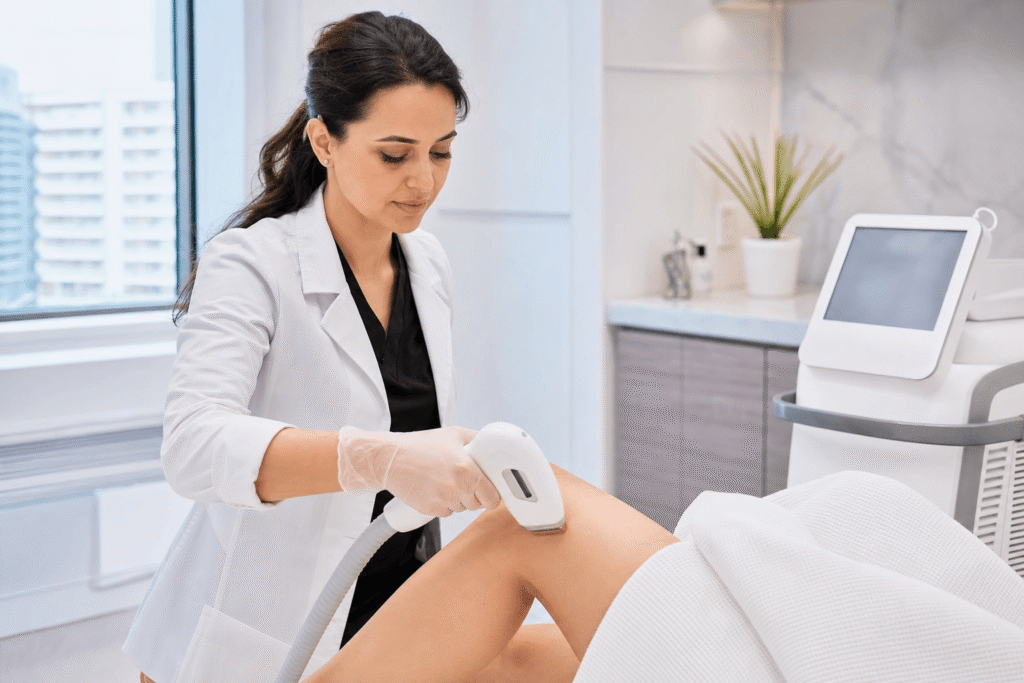
Is laser hair removal safe? If you’re considering this popular treatment, you’re right to ask. Safety depends on several factors: the type of laser technology used, your skin type and medical history, the training of your practitioner, and how closely safety protocols are followed during and after treatment. This article breaks down the clinical evidence, real risks and side effects, contraindications you need to know about, and what actually makes laser hair removal safe or unsafe for different individuals.
We’ll cover how the technology works, what FDA approval means for safety, which skin types face higher risks with certain lasers, and the specific medical conditions or medications that can make treatment dangerous. You’ll also learn what to expect during a properly conducted session and how post-treatment care affects your safety outcomes.
Quick Answer
Laser hair removal is safe when performed by trained practitioners using FDA-approved equipment appropriate for your skin type. Serious complications are rare, but safety depends on proper candidate screening, correct laser selection, and following pre- and post-treatment protocols.
Is Laser Hair Removal Safe? What Clinical Evidence Shows
Multiple peer-reviewed studies confirm that laser hair removal is a safe procedure when performed correctly. The technology has been FDA-approved for permanent hair reduction since the late 1990s, with millions of treatments performed annually across North America.
Clinical trials consistently show serious adverse events occur in less than 1% of treatments. The most common issues are temporary and mild: redness, swelling, and minor discomfort that resolve within hours to a few days.
The laser technology uses selective photothermolysis, a principle that targets melanin in hair follicles while leaving surrounding skin intact. The light energy is non-ionizing radiation, meaning it doesn’t carry the cancer risk associated with ionizing radiation like X-rays or UV exposure.
Research published in dermatology journals shows that when practitioners match the laser type to the patient’s Fitzpatrick skin type and adjust settings appropriately, the risk profile drops significantly. At Samar Skin Care Clinic in North York, we use FDA-approved Class 4 laser technology and conduct thorough skin assessments before every treatment to ensure we’re using the safest parameters for each client’s unique skin characteristics.
Key Takeaways
- Verify your practitioner uses FDA-approved lasers matched to your skin type
- Expect mild temporary redness and swelling, serious complications are rare
- Avoid treatment if pregnant, tanning, or taking photosensitizing medications
- Choose practitioners with formal training and current certifications in laser safety
- Ask about skin type assessment and customized laser settings before booking
- Follow pre-treatment and aftercare protocols to minimize side effect risks
How Laser Hair Removal Works and Why It’s Considered Safe
Understanding the mechanism helps explain why laser hair removal is safe when done right. The laser emits a specific wavelength of light that melanin in the hair shaft absorbs. This light energy converts to heat, which damages the hair follicle’s ability to produce new hair.
The key safety feature is selectivity. Melanin in the hair absorbs far more energy than surrounding skin tissue, especially when there’s strong contrast between hair color and skin tone. The laser pulse duration is calibrated to heat the follicle without transferring excessive heat to nearby skin structures.
Three main laser types dominate clinical use: Alexandrite (755nm wavelength), Diode (800-810nm), and Nd:YAG (1064nm). Each wavelength penetrates to different depths and has different melanin absorption characteristics, which is why matching the laser to your skin type is a safety requirement.
Cooling systems built into modern lasers protect the skin surface. The laser doesn’t affect internal organs or deeper body structures. Light energy at these wavelengths penetrates only 2-4mm into the skin, reaching the hair follicle but going no deeper.
Common Side Effects and How to Minimize Them
Most people experience some temporary side effects after laser hair removal. These are normal physiological responses, not complications. Knowing what’s expected helps you distinguish between typical reactions and signs of a problem.
Redness and mild swelling at the treatment site occur in virtually all clients. This inflammation typically peaks within 2-4 hours and subsides within 24-48 hours. It’s similar to mild sunburn and indicates the laser successfully heated the follicles.
Some clients notice small bumps around the treated hair follicles, a condition called perifollicular edema. These bumps usually disappear within hours. Applying ice packs immediately after treatment reduces both swelling and discomfort.
Temporary pigment changes can occur, particularly in clients with medium to dark skin tones. Hyperpigmentation (darkening) is more common than hypopigmentation (lightening) and usually resolves within weeks to months. The risk increases significantly if you tan before or after treatment, which is why sun avoidance is critical.
| Side Effect | Frequency | Duration | How to Minimize |
|---|---|---|---|
| Redness and swelling | Nearly universal | 2-48 hours | Ice packs immediately after, avoid hot showers |
| Perifollicular bumps | Common | Few hours | Normal response, no action needed |
| Temporary hyperpigmentation | Occasional | Weeks to months | Strict sun avoidance, use SPF 50+ |
| Crusting or scabbing | Rare | 5-14 days | Proper laser settings, avoid picking |
| Burns or blisters | Very rare | 2-4 weeks | Proper skin type assessment and laser selection |
Serious complications like burns, blistering, or scarring are rare but almost always preventable. They typically result from using incorrect laser settings for the client’s skin type, treating tanned or sunburned skin, or ignoring contraindications like photosensitizing medications.
Ready to get started?
Book a consultation with Samar to discuss your skin concerns and find the right treatment plan for you.
Who Should NOT Get Laser Hair Removal: Contraindications and Risk Factors
Not everyone is a safe candidate for laser hair removal. Certain medical conditions, medications, and circumstances significantly increase risk and can turn an otherwise safe procedure into a dangerous one.
Medical Conditions and Medications That Increase Risk
Active skin infections or conditions in the treatment area make laser hair removal unsafe. This includes bacterial infections, active herpes outbreaks, eczema flares, or psoriasis plaques. The laser can worsen these conditions and spread infection to larger areas.
Photosensitizing medications are a major contraindication. These drugs make your skin abnormally sensitive to light energy, dramatically increasing burn risk. Common culprits include tetracycline antibiotics, isotretinoin (Accutane), certain blood pressure medications, and some anti-inflammatory drugs. Many people don’t realize that common supplements like St. John’s Wort can increase photosensitivity just as much as prescription drugs.
Autoimmune disorders affecting the skin require careful evaluation. Conditions like lupus can cause abnormal reactions to laser treatment. Similarly, clients with keloid scarring tendencies face higher risk of problematic scarring from any skin trauma, including laser treatment.
When Pregnancy, Tanning, and Active Skin Conditions Are Concerns
Pregnancy is a contraindication, though not because of proven harm. There simply isn’t enough safety data on laser hair removal during pregnancy, so the conservative medical approach is to wait until after delivery and breastfeeding. For detailed guidance on this topic, see our article on safety considerations for laser hair removal during pregnancy.
Recent sun exposure or active tan is an absolute contraindication. Tanned skin contains elevated melanin levels throughout the epidermis, not just in hair follicles. The laser can’t distinguish between melanin in hair and melanin in tanned skin, which dramatically increases burn risk. You need to avoid sun exposure for at least 4-6 weeks before treatment and maintain strict sun avoidance throughout your treatment series.
Safety by Skin Type: Choosing the Right Laser Technology
Skin type is the single most important safety factor in laser hair removal. The Fitzpatrick scale classifies skin into six types (I-VI) based on how it responds to UV exposure and its baseline melanin content. Using the wrong laser for your skin type is the leading cause of burns, scarring, and pigmentation problems.
Lighter skin types (Fitzpatrick I-III) have strong contrast between hair melanin and skin melanin. This makes treatment safer and more effective because the laser can easily distinguish between its target (dark hair) and surrounding tissue (light skin).
Alexandrite and Diode Lasers for Lighter Skin Tones
Alexandrite lasers (755nm wavelength) are the gold standard for light to medium skin tones. This wavelength has strong melanin absorption, making it highly effective for hair removal. These lasers work best on Fitzpatrick types I-III and can be used cautiously on type IV with proper settings.
Diode lasers (800-810nm wavelength) offer a middle ground. The slightly longer wavelength penetrates deeper and has somewhat better discrimination between hair and skin melanin. This makes diode lasers suitable for skin types I-IV and occasionally type V when used conservatively.
Nd:YAG Lasers for Darker Skin Tones
Darker skin types (Fitzpatrick IV-VI) contain more melanin throughout the epidermis. This creates two challenges: less contrast between hair and skin, and higher risk that the laser will heat skin melanin instead of just follicle melanin.
Nd:YAG lasers (1064nm wavelength) are the safest choice for dark skin. This longer wavelength has lower melanin absorption overall, which actually creates better selectivity in high-melanin skin. The Nd:YAG wavelength passes through the melanin-rich epidermis with less absorption, then targets the even-more-melanin-rich hair follicle beneath.
The tradeoff is that Nd:YAG treatment typically requires more sessions than Alexandrite or Diode treatment. At Samar Skin Care Clinic, we exclusively use Class 4 laser systems and select the specific laser wavelength based on your Fitzpatrick type and hair characteristics.
| Fitzpatrick Type | Skin Characteristics | Recommended Laser | Special Considerations |
|---|---|---|---|
| I-II | Very light, always burns | Alexandrite or Diode | Lowest risk, best results |
| III-IV | Light to medium, sometimes burns | Diode or Alexandrite (lower settings) | Requires careful parameter selection |
| V | Dark, rarely burns | Nd:YAG | Higher risk with shorter wavelengths |
| VI | Very dark, never burns | Nd:YAG only | Other lasers unsafe, more sessions needed |
We always perform a patch test on first-time clients, especially those with darker skin tones or uncertain medication histories. This test lets us verify your skin’s response to the laser before treating larger areas.
What to Expect During Treatment and Safety Protocols Used
Professional laser hair removal sessions follow strict safety protocols designed to protect you and optimize outcomes. Knowing what should happen helps you identify providers who follow best practices.
Your first visit should include a comprehensive consultation. Your practitioner should ask about medications, recent sun exposure, medical history, and any skin conditions. They’ll examine the treatment area and assess your Fitzpatrick skin type to determine the safest laser wavelength and settings for your individual characteristics.
Before treatment begins, the area is cleansed to remove oils, lotions, or debris. Hair should be shaved within 24 hours prior, leaving 1-2mm of stubble. This length is ideal because it guides the laser into the follicle without causing surface burning from longer hair.
Eye protection is mandatory for all treatments, not just facial areas. The laser wavelengths used can cause retinal damage if they enter the eyes. You’ll wear protective goggles or shields, and your practitioner should also wear appropriate eyewear. This applies to all body areas, including legs, underarms, and bikini treatments. For sensitive area treatments like Brazilian laser hair removal, practitioners use more conservative settings, take extra time to ensure comfort, and maintain the same strict eye safety protocols. Learn more about safe approaches to professional laser hair removal services for delicate zones.
A trained practitioner performs a test pulse before treating larger areas. This test verifies your skin’s response to the selected laser settings. They observe for immediate reactions like excessive redness, blanching, or unusual discomfort. At Samar Skin Care Clinic, we document these test settings and skin responses for every session, creating a safety record that guides future treatments.
During treatment, the practitioner should work methodically with appropriate overlap between pulses to ensure complete coverage. They’ll check in with you regularly about pain levels and observe your skin’s response continuously. Any unusual reactions should prompt immediate setting adjustments or treatment pause.
After completing the treatment, a cooling gel or aloe vera is applied to soothe the skin. You should receive written aftercare instructions covering sun protection, product restrictions, activity limitations, and signs of complications that require follow-up.
Post-Treatment Care for Optimal Safety and Results
What you do after treatment significantly affects both safety and outcomes. Proper aftercare prevents complications and promotes healing while protecting your investment in the treatment series.
Immediately after treatment, apply ice packs or cold compresses for 10-15 minutes to reduce swelling and discomfort. Many clients keep aloe vera gel refrigerated for dual cooling and soothing effects.
Avoid hot water for 24-48 hours. This means no hot showers, baths, hot tubs, saunas, or steam rooms. Heat can worsen inflammation and increase discomfort. Lukewarm water is fine for cleansing.
Skip intense exercise for 24 hours. Exercise increases body temperature and causes sweating, both of which can irritate treated skin and potentially introduce bacteria into sensitized follicles.
Sun protection is absolutely critical for at least two weeks post-treatment, and ideally throughout your entire treatment series. Treated skin is more vulnerable to UV damage, and sun exposure is the leading cause of post-treatment hyperpigmentation. Use broad-spectrum SPF 50+ and reapply every two hours when outdoors.
Don’t scratch or pick at the treatment area, even if you notice shedding hair or small bumps. Treated hairs will shed over 7-14 days as damaged follicles expel them. Picking can introduce infection or cause scarring.
For the first few days, use only gentle, fragrance-free cleansers and moisturizers. Avoid products with alcohol, fragrance, retinoids, or acids that might irritate sensitive skin. Well-hydrated skin heals faster and experiences less discomfort.
Between sessions, you can shave but never wax, pluck, or thread. These methods remove the hair shaft that the next laser treatment needs to target. Shaving is fine because it only removes hair above the skin surface.
For more guidance on post-treatment product use, see our article on whether you can wear deodorant after laser hair removal.
Safety and What to Expect
Understanding typical treatment experiences and normal responses helps you recognize what’s expected versus what might signal a problem. Most clients tolerate laser hair removal well with minimal discomfort and quick recovery.
During treatment, you’ll feel a snapping sensation with each laser pulse. The intensity varies by body area, with sensitive zones like the bikini line, upper lip, and underarms feeling more intense than arms or legs. Modern cooling systems built into the laser handpiece minimize discomfort by cooling the skin surface before, during, or after each pulse.
Treatment duration depends on the area size. Small areas like the upper lip take 5-10 minutes, while larger areas like full legs may take 45-60 minutes. Pain levels are generally manageable without anesthesia, though topical numbing creams are available for sensitive areas when needed.
Immediately after treatment, the treated area will appear pink to red, similar to mild sunburn. This is a normal inflammatory response indicating the laser successfully heated the hair follicles. The redness typically peaks within 2-4 hours and fades within 24-48 hours for most clients.
You may notice treated hairs pushing out of the follicles over the next 7-14 days. This shedding is expected as damaged follicles expel the treated hair. Don’t pick or pull at these hairs. Let them shed naturally to avoid irritation or infection risk.
Most clients return to normal activities immediately after treatment, though it’s recommended to avoid intense exercise for 24 hours and hot showers or baths for 24-48 hours. There’s no significant downtime that prevents work or daily activities.
Long-term studies tracking patients 5-10+ years after treatment show no increased risk of skin cancer, premature aging, or other serious complications. A 2018 systematic review examining patients up to 12 years post-treatment found that long-term side effects were extraordinarily rare. The non-ionizing radiation used in laser hair removal doesn’t damage DNA the way UV or ionizing radiation does. For a thorough discussion of cancer risk specifically, see our complete guide to laser hair removal and cancer risk.
How to Verify Your Practitioner Follows Safety Standards
Equipment and technique matter, but practitioner qualification ultimately determines whether your treatment is safe. Here’s how to verify you’re in competent hands.
Ask about certification and training. In Ontario, medical aestheticians performing laser hair removal should have formal training from recognized programs and current certification. Samar graduated from CNTAA (Canadian National Training Academy for Aesthetics) in 2020 and maintains over 10 certifications in advanced skin treatments.
Verify the equipment is FDA-approved or Health Canada cleared. Ask which specific laser system the clinic uses and verify its approval status. Reputable clinics answer this question readily.
Check that the clinic performs thorough consultations. If a clinic offers to treat you without asking about medications, sun exposure, medical history, or examining your skin type, that’s a major red flag.
Look for proper documentation practices. Professional clinics photograph treatment areas, document settings used, and maintain records of your response. This isn’t just legal compliance. It’s how practitioners track what works safely for your individual physiology.
Observe the treatment environment. Is it clean and professional? Do they use disposable items where appropriate? Are safety protocols like eye protection used consistently for all treatments including body areas?
Be cautious of deals that seem too good to be true. Laser equipment is expensive, and proper treatment takes time. Clinics offering drastically discounted prices may be cutting corners on equipment quality, practitioner training, or safety protocols.
Frequently Asked Questions
Is laser hair removal safe?
Yes, laser hair removal is safe when performed by trained practitioners using FDA-approved equipment appropriate for your skin type. Clinical studies show serious complications occur in less than 1% of treatments. Most side effects are temporary redness and swelling resolving within 24-48 hours. Safety depends on proper screening, correct laser selection, and following protocols.
Can laser hair removal cause cancer?
No, laser hair removal does not cause cancer. The technology uses non-ionizing radiation that doesn’t damage DNA like UV or X-ray exposure. Long-term studies tracking patients for 10+ years show no increased skin cancer incidence. The laser affects only melanin in hair follicles at 2-4mm depth, not deeper structures.
What are the most common side effects of laser hair removal?
The most common side effects are temporary redness and swelling resolving within 24-48 hours, occurring in nearly all clients. Small bumps around follicles are common and disappear within hours. Mild discomfort during treatment feels like rubber band snaps. Temporary pigment changes can occur in darker skin tones, usually resolving within weeks to months. Serious complications like burns or scarring are rare.
How should I prepare for laser hair removal to ensure safety?
Avoid sun exposure, tanning beds, and self-tanners for 4-6 weeks before treatment as tanned skin increases burn risk. Shave within 24 hours before your appointment but don’t wax, pluck, or thread for 4-6 weeks prior. Disclose all medications and supplements since many increase photosensitivity. Avoid exfoliating treatments and harsh products for several days before. Don’t use lotions or makeup on the treatment area the day of your session.
Is there any downtime after laser hair removal?
There is typically no significant downtime after laser hair removal. Most clients return to normal activities immediately, though avoid intense exercise for 24 hours. You’ll experience temporary redness for several hours to two days, but this doesn’t prevent work or daily activities. Avoid hot showers, baths, and sun exposure for 24-48 hours. Most people schedule treatments during lunch breaks without needing time off.
Making the Safe Choice for Laser Hair Removal
Laser hair removal is proven safe when three conditions align: FDA-approved equipment matched to your skin type, a properly trained practitioner who follows safety protocols, and a client who’s been accurately screened and follows pre- and post-treatment guidelines. The clinical evidence is clear, and millions of successful treatments confirm what the research shows.
At Samar Skin Care Clinic, safety isn’t just about having the right equipment. It’s about Samar’s commitment to thorough assessments, individualized treatment parameters, and ongoing education that keeps her knowledge current with evolving safety standards. Her CNTAA training and 10+ certifications in advanced skin treatments mean every client receives treatment grounded in current best practices.
If you’re ready to explore whether laser hair removal is right for you, the next step is a consultation where we can assess your skin type, discuss any medical considerations, and answer your specific safety questions. Book your appointment at our North York location on Yonge Street, or call (647) 764-8424 to speak with our team about your concerns.
