
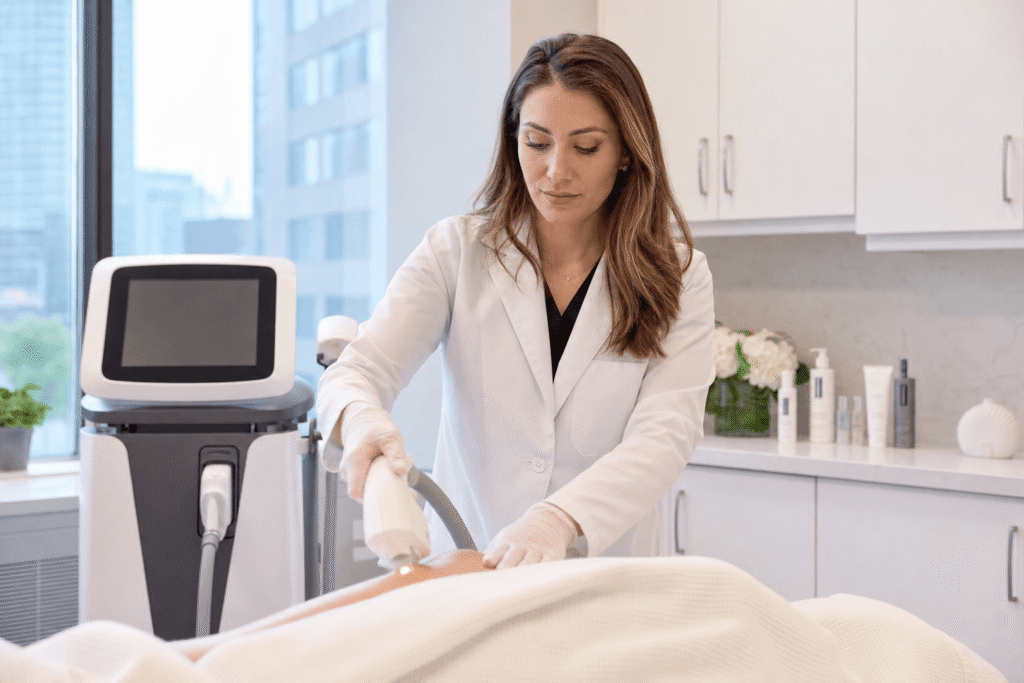
If you’re considering laser hair removal, one of the first questions you’ll ask is: how many sessions will I actually need? Most people require 6 to 8 treatment sessions to achieve optimal hair reduction, but your exact number depends on several factors including your hair color, skin type, hormonal balance, and the area being treated. This timeline reflects the natural hair growth cycle, and understanding why multiple sessions are necessary helps you set realistic expectations and plan your treatment schedule.
This guide breaks down everything that influences your laser hair removal session count. You’ll learn how hair growth phases work, what determines your personal treatment timeline, and how different body areas require different approaches.
Quick Answer
Most people need 6 to 8 laser hair removal sessions spaced 4 to 6 weeks apart for face treatments and 6 to 8 weeks for body areas. Your exact number depends on hair thickness, skin tone, and hormonal factors.
Why Multiple Laser Hair Removal Sessions Are Necessary: Understanding the Hair Growth Cycle
Laser hair removal doesn’t work on every hair follicle simultaneously because not all your hair is actively growing at the same time. Each follicle moves through distinct growth phases independently, and laser hair removal targets hair follicles only when they’re in a specific phase of development.
This biological reality makes multiple sessions essential. A single treatment can only address the follicles that are active at that exact moment.
The Three Hair Growth Phases: Anagen, Catagen, and Telogen
Your hair follicles cycle through three distinct phases. The anagen phase is the active growth period when the follicle produces a hair shaft connected to its blood supply and rich in melanin. During the catagen phase, growth stops and the follicle begins to shrink. The telogen phase is the resting period when the hair remains in place but isn’t actively growing.
At any given moment, roughly 20 to 30 percent of your body hair is in the anagen phase. The remaining follicles are resting or transitioning, which explains why a single treatment only reduces your total hair count by about 15 to 20 percent.
Why Laser Only Works During the Anagen Phase
Laser energy targets melanin, the pigment that gives hair its color. During anagen, the hair shaft is firmly connected to the follicle’s blood supply and contains concentrated melanin. When the laser pulse is absorbed, it heats the follicle structure and damages the cells responsible for hair production. Hairs in catagen or telogen lack this strong connection, so the energy doesn’t transfer effectively to the growth cells below.
Key Takeaways
- Expect 6 to 8 sessions for most areas, spaced according to hair growth cycles.
- Understand that each treatment reduces hair by approximately 15 to 20 percent.
- Plan longer timelines if you have hormonal conditions like PCOS or menopause.
- Choose a provider who adjusts laser settings based on your Fitzpatrick skin type.
- Schedule maintenance sessions annually if hormones or genetics affect regrowth patterns.
How Many Laser Hair Removal Sessions Do You Actually Need?
The standard answer is 6 to 8 sessions, but this is a starting point, not a guarantee. Your actual session count depends on factors we’ll explore in detail throughout this article.
After the first treatment, you’ll typically see 15 to 20 percent hair reduction as treated follicles shed over the following 2 to 3 weeks. The second session catches a new group of follicles that have entered anagen, adding another 15 to 20 percent reduction. This progressive approach continues through subsequent treatments.
By session 4 or 5, most people notice significantly less hair density. Sessions 6 through 8 target the stubborn follicles and achieve the final reduction level. Some clients are satisfied after 6 treatments, while others benefit from 8 to 10 sessions, particularly if they have dark coarse hair, hormonal influences, or are treating areas like the face where follicle activity is higher.
Maintenance sessions are common. Even after your initial series, hormones, genetics, or life changes like pregnancy or menopause can activate dormant follicles. Most people schedule one maintenance treatment every 12 to 18 months to address any new growth.
Realistic Expectations for Hair Reduction After Each Session Number
Understanding what to expect after each treatment helps you gauge progress and stay motivated through the full series.
After Session 1: You’ll see 15 to 20 percent reduction in the treated area. Hair shedding begins within 1 to 3 weeks as damaged follicles release their shafts. Regrowth appears lighter and finer than before treatment.
After Session 2: Cumulative reduction reaches 30 to 35 percent. The difference becomes noticeable as more follicles are eliminated. You’ll experience longer periods between visible regrowth.
After Session 3: Reduction typically reaches 40 to 50 percent. The remaining hair is often finer and grows slower. Many clients notice they can shave less frequently at this point.
After Sessions 4 and 5: You’ll achieve 55 to 65 percent reduction. Results are visibly significant, with sparse regrowth that’s lighter in color and texture. Some areas may appear nearly hair-free.
After Sessions 6 through 8: Most people reach 80 to 95 percent reduction in the treated area. This level is considered optimal for most treatment goals. Remaining hair is minimal and maintenance-ready.
It’s important to understand that laser hair removal is FDA-cleared for permanent hair reduction, not complete permanent removal. Hormones, genetics, and time can reactivate dormant follicles, which is why maintenance sessions exist. For more on long-term outcomes, see our guide on the permanence of laser hair removal results.
Key Factors That Determine Your Total Session Count
No two treatment plans are identical because several biological and lifestyle factors influence how your body responds to laser energy.
Hair Type, Color, and Thickness Impact
Dark, coarse hair responds best to laser treatment because it contains high melanin concentration. If you have thick black or dark brown hair, you’ll likely see strong results within the standard 6 to 8 session range. Fine or light hair poses more challenges. Blonde, red, and gray hair contain less melanin, which reduces laser absorption. Gray hair, which lacks melanin entirely, typically doesn’t respond to traditional laser hair removal.
Hormonal Conditions: PCOS, Menopause, and Medications
Hormones significantly affect hair growth patterns. Women with polycystic ovary syndrome (PCOS) often experience excess facial and body hair due to elevated androgen levels. While laser hair removal effectively reduces existing hair, the underlying hormonal condition can trigger dormant follicles to activate over time. If you have PCOS, expect to need maintenance sessions more frequently than someone without hormonal influences. The initial treatment series may require 8 to 10 sessions, and you might schedule maintenance every 6 to 9 months rather than annually.
Ready to get started?
Book a consultation with Samar to discuss your skin concerns and find the right treatment plan for you.
Session Requirements by Treatment Area: Face, Body, and Bikini Zone
Different body areas have different hair growth cycles and follicle density, which directly impacts how many sessions you’ll need.
| Treatment Area | Typical Session Count | Interval Between Sessions |
|---|---|---|
| Upper Lip, Chin, Sideburns | 6 to 8 sessions | 4 to 5 weeks |
| Underarms | 6 to 8 sessions | 6 to 8 weeks |
| Bikini Line, Brazilian | 7 to 9 sessions | 6 to 8 weeks |
| Legs (Full or Half) | 6 to 8 sessions | 8 to 10 weeks |
| Back, Chest, Abdomen | 6 to 9 sessions | 8 to 10 weeks |
| Arms | 6 to 8 sessions | 6 to 8 weeks |
Facial hair cycles faster than body hair, which is why upper lip and chin treatments are scheduled every 4 to 5 weeks. Hormonal influences are stronger on the face, so some clients need additional sessions beyond the initial 6 to 8. Underarm hair is typically coarse and dense, with most people achieving excellent results within 6 to 8 sessions. The bikini zone and Brazilian laser hair removal treatment areas often require 7 to 9 sessions because the hair is coarse and the follicle density is high.
When treating multiple areas simultaneously, we adjust session intervals to match the fastest-cycling zone. For example, if you’re doing full face and legs together, we schedule every 5 to 6 weeks so facial hair doesn’t outpace the treatment timeline.
How Long to Wait Between Laser Hair Removal Sessions
Spacing your sessions correctly is just as important as the total number of treatments. If you schedule too soon, you’re treating follicles that are still in catagen or telogen, wasting a session. Wait too long, and you miss the anagen window entirely.
For facial areas, the ideal interval is 4 to 5 weeks. Facial follicles cycle faster due to higher androgen receptor activity, especially on the chin and upper lip. Body areas like underarms, bikini, and arms should be treated every 6 to 8 weeks. This timing aligns with the typical anagen cycle length for these zones. Legs, back, and chest can be spaced 8 to 10 weeks apart because follicles in these areas have longer rest phases.
What happens if you miss a scheduled session? Short delays of a week or two usually don’t derail your progress, but extending the gap significantly means some follicles will cycle through anagen without being treated. This doesn’t set you back to square one, but it may mean you need an extra session at the end of your series to catch those missed follicles. To learn more about optimal scheduling, see our guide on timing between laser hair removal sessions.
How Skin Type and Melanin Levels Affect Your Treatment Plan
Your skin tone plays a critical role in determining which laser settings are safe and effective, and how many sessions you’ll need. The Fitzpatrick scale classifies skin into six types based on melanin content, and this classification directly impacts your treatment protocol.
Specific Session Requirements for Different Fitzpatrick Skin Types
Types I and II (very fair to fair skin) contain minimal melanin in the skin itself, creating high contrast between skin and dark hair. This makes laser treatment highly effective because energy targets the hair follicle without significant absorption by surrounding skin. Most clients with these skin types achieve optimal results within 6 to 8 sessions using Alexandrite or Diode lasers.
Types III and IV (light to moderate brown skin) still respond well to laser treatment, though settings must be carefully calibrated. There’s more melanin in the skin, which increases the risk of absorbing laser energy and causing temporary hyperpigmentation if parameters aren’t adjusted correctly. These skin types typically require 7 to 9 sessions with Diode lasers that balance safety and effectiveness.
Types V and VI (dark brown to deeply pigmented skin) require specialized laser technology and conservative settings. Higher skin melanin means traditional lasers like Alexandrite can’t safely deliver enough energy without risking burns or pigmentation changes. Nd:YAG lasers, which use longer wavelengths, penetrate deeper and bypass much of the skin’s melanin to target the follicle directly. These skin types often need 8 to 10 sessions because energy settings must be more conservative for safety.
| Fitzpatrick Type | Skin Characteristics | Typical Session Count | Recommended Laser |
|---|---|---|---|
| I – II | Very fair, burns easily | 6 to 8 sessions | Alexandrite, Diode |
| III – IV | Light to olive tone | 7 to 9 sessions | Diode |
| V – VI | Brown to dark brown | 8 to 10 sessions | Nd:YAG |
Laser Technology Selection: Diode, Alexandrite, and Nd:YAG
Three primary laser types are used for hair removal, each with specific advantages depending on your skin tone and hair characteristics. Alexandrite lasers use a 755nm wavelength and are highly effective for fair to olive skin (Fitzpatrick I through IV) with dark hair. Diode lasers operate at 800 to 810nm and work across a wider range of skin tones, from fair to light brown (Fitzpatrick I through V). Nd:YAG lasers use a longer 1064nm wavelength specifically designed for darker skin (Fitzpatrick V and VI). The longer wavelength penetrates deeper and bypasses much of the skin’s melanin, focusing energy on the hair follicle.
Selecting the appropriate laser technology for your Fitzpatrick skin type ensures both safety and effectiveness. Using the wrong wavelength or settings can lead to burns, hyperpigmentation, or poor results, which is why working with experienced providers who understand skin-specific protocols is essential for achieving optimal outcomes.
We’ve found that clients who maintain consistent 6-week intervals for body treatments achieve better results than those who space sessions irregularly. Missing appointments or stretching gaps beyond recommended windows allows more follicles to cycle through anagen undetected, extending your overall timeline significantly.
Frequently Asked Questions
How many laser hair removal sessions do I need?
Most people need 6 to 8 sessions to achieve optimal hair reduction. Facial areas and hormonal zones sometimes require 8 to 10 sessions. Factors like hair color, skin type, and hormonal conditions affect your total count. Maintenance treatments every 12 to 18 months help sustain results long-term.
Why do I need multiple sessions for laser hair removal?
Laser hair removal only works on follicles in the active anagen growth phase, which represents just 20 to 30 percent of your hair at any time. Multiple sessions spaced strategically ensure you target different follicles as they cycle into their growth phase over time.
How long should I wait between laser hair removal sessions?
Facial treatments should be spaced 4 to 5 weeks apart. Body areas like underarms and bikini require 6 to 8 weeks between sessions. Legs and chest can be treated every 8 to 10 weeks. These intervals align with natural hair growth cycles for each area.
Can I shave between laser hair removal sessions?
Yes, shaving is recommended between sessions. Shaving removes the hair shaft but leaves the follicle intact, which the laser needs to target. Avoid waxing, plucking, or threading as these remove the entire follicle. Shave 24 hours before each appointment for best results.
What happens if I miss a scheduled laser hair removal session?
Missing a session by a week or two has minimal impact, though it may slightly extend your timeline. Longer delays mean some follicles will cycle through anagen without being treated, requiring additional sessions later. Your progress isn’t lost, but consistency ensures the most efficient results.
Do darker skin tones require more laser hair removal sessions?
Darker skin types (Fitzpatrick V and VI) often require 8 to 10 sessions because laser settings must be conservative to protect higher melanin content. Nd:YAG lasers are safest for deeply pigmented skin and deliver effective results with appropriate technology and experienced providers.
Plan Your Personalized Laser Hair Removal Timeline in North York
The number of laser hair removal sessions you need isn’t determined by a generic formula. Your hair characteristics, skin type, hormonal profile, and treatment goals all factor into a personalized plan. While most people achieve excellent results within 6 to 8 sessions, understanding what influences your specific timeline helps you set realistic expectations and commit to the process.
At Samar Skin Care Clinic in North York, Samar combines her CNTAA training with over 10 specialized certifications to design treatment protocols based on your individual Fitzpatrick skin type, hair growth patterns, and aesthetic goals. Toronto clients appreciate the detailed assessments and customized session plans that reflect their unique characteristics, not a one-size-fits-all approach. Our Yonge Street location serves clients throughout the Greater Toronto Area who want expert guidance backed by advanced technology and proven results.
Ready to start your laser hair removal journey with realistic timelines and expert guidance? Book your consultation at Samar Skin Care Clinic or call (647) 764-8424 to discuss your treatment plan and schedule your first session.
