
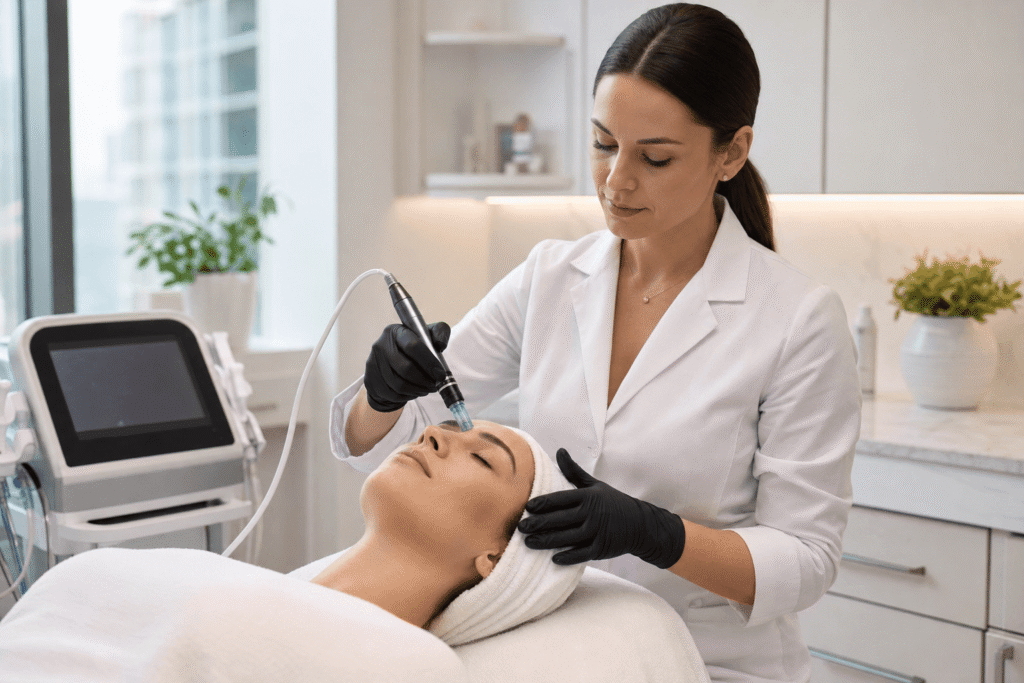
Microneedling is a minimally invasive skin treatment that uses fine needles to create controlled micro-injuries in the skin, triggering your body’s natural healing response to produce new collagen and elastin. Also called collagen induction therapy or percutaneous collagen induction, this procedure effectively treats acne scars, wrinkles, enlarged pores, stretch marks, and hyperpigmentation. At Samar Skin Care Clinic in North York, clients often choose professional microneedling treatment after learning about its versatility and proven results across different skin types.
This guide explains exactly how microneedling works, what conditions it treats, what to expect during and after treatment, and how to choose a qualified provider. You’ll learn about realistic recovery timelines, who makes a good candidate, and when to combine microneedling with other treatments like PRP or radiofrequency.
Quick Answer
Microneedling uses tiny sterile needles to puncture the skin and stimulate collagen production, improving texture, scars, wrinkles, and pigmentation. Most clients need 3-6 sessions spaced 4-6 weeks apart, with results appearing gradually over 3-6 months as new collagen forms.
What Is Microneedling?
Microneedling is a cosmetic procedure that uses a device equipped with fine, sterile needles to create thousands of microscopic punctures in the skin’s surface. These controlled injuries are shallow, typically penetrating between 0.5mm and 3mm depending on the treatment area and skin concern being addressed.
The procedure goes by several names in clinical settings. Collagen induction therapy describes the biological mechanism. Percutaneous collagen induction refers to the through-the-skin delivery method. All these terms describe the same fundamental process: using controlled injury to trigger regeneration.
Professional microneedling differs significantly from at-home derma rollers. Medical-grade devices penetrate deeper with greater precision, and licensed professionals can safely adjust needle depth based on your skin type and treatment goals. The micro-channels created during treatment also enhance absorption of topical serums applied immediately afterward.
Key Takeaways
- Expect 3-6 sessions spaced 4-6 weeks apart for optimal collagen rebuilding results
- Verify your provider holds medical aesthetics credentials and proper device training
- Choose darker skin specialists who understand Fitzpatrick-specific depth protocols
- Anticipate 2-5 days downtime with redness and flaking as standard healing
- Combine PRP or growth factor serums for enhanced scar and texture improvement
- Avoid treatment during active acne breakouts, pregnancy, or recent Accutane use
How Does Microneedling Work?
The science behind microneedling centers on your skin’s wound-healing cascade. When the needles create micro-injuries, your body interprets this as tissue damage requiring repair. Within hours, inflammatory cells arrive at the treatment site to remove debris and release growth factors.
These growth factors signal fibroblasts in the dermal layer to start producing new collagen and elastin. Type III collagen appears first during the healing phase, then gradually converts to Type I collagen over the following months. Type I is the structural protein that gives skin its firmness and resilience.
The entire healing process unfolds in three phases. The inflammatory phase lasts about three days, during which you’ll see redness and mild swelling. The proliferative phase runs from day three through week four as new tissue forms. The remodeling phase continues for months afterward as the new collagen matures and skin texture improves.
Needle depth determines which skin layers receive treatment. Superficial needling at 0.5-1mm targets the epidermis for product absorption and minor texture improvements. Medium depth at 1-2mm reaches the upper dermis where most collagen production occurs. Deeper treatment at 2-3mm addresses significant scarring but requires longer recovery.
Samar adjusts needle depth based on each client’s Fitzpatrick skin type and concern area. Darker skin tones typically receive conservative depths of 1-1.5mm to minimize post-inflammatory hyperpigmentation risk while still triggering effective collagen response.
What Skin Conditions Does Microneedling Treat?
Microneedling addresses a wide range of skin concerns, though it works best for texture-related issues rather than surface-level problems. Understanding which conditions respond well helps you set realistic expectations.
Atrophic acne scars respond particularly well to microneedling. These are the depressed or pitted scars that form when collagen breaks down during inflammatory acne healing. Boxcar scars, rolling scars, and ice pick scars all show measurable improvement with repeated treatments. Clinical studies show that patients with moderate acne scarring typically see 30-50% improvement after 3-4 sessions. For those seeking acne scar treatment options, microneedling often works well alone or combined with laser resurfacing.
Enlarged pores also shrink with consistent microneedling. While you can’t actually change pore size, the collagen produced around each pore plumps the surrounding skin, making openings appear smaller. Surgical scars and stretch marks improve more slowly than facial concerns, but multiple sessions can soften their appearance.
Microneedling improves hyperpigmentation through two mechanisms: promoting cell turnover and enhancing penetration of brightening serums. Post-inflammatory hyperpigmentation from old acne or injuries responds well to this approach. Melasma requires more caution and conservative needle depths combined with specific brightening protocols. Sun damage and age spots fade with microneedling paired with antioxidant serums, though specialized pigmentation laser treatments often work faster for isolated dark spots.
Fine lines and wrinkles soften as new collagen plumps the skin from within. The improvement appears gradual but tends to look more natural because it’s your own tissue rebuilding itself.
Microneedling Benefits and Results
The benefits of professional microneedling treatment extend beyond addressing specific skin concerns. Collagen production increases significantly after microneedling sessions, with research showing noticeable improvements in skin density and structure after multiple treatments.
Skin texture becomes smoother and more even. Rough patches, surface irregularities, and slight scarring all diminish as the skin resurfaces itself. Many clients notice that makeup applies more evenly and skincare products absorb better after a series of treatments.
Product penetration enhances dramatically during the healing window. Serums applied immediately after treatment can penetrate up to 30 times deeper than on intact skin. This makes microneedling an excellent delivery method for growth factors, peptides, and other active ingredients that work best when they reach the dermal layer.
Results develop over time rather than appearing immediately. You’ll see initial improvement within a few weeks as inflammation subsides and the first round of collagen forms. Peak results emerge at the 3-6 month mark as collagen continues maturing and remodeling.
Ready to get started?
Book a consultation with Samar to discuss your skin concerns and find the right treatment plan for you.
What to Expect During Your Microneedling Session
Understanding the treatment process helps you feel prepared and confident. A typical professional microneedling session at a medical aesthetics clinic follows a structured protocol designed to maximize results while ensuring your comfort and safety.
Your appointment begins with a thorough skin cleansing to remove all makeup, oil, and debris. The treatment area must be completely clean to prevent introducing bacteria into the micro-channels. Most clinics use an antiseptic cleanser followed by an alcohol wipe for additional sterilization.
A topical anesthetic cream goes on next. This numbing agent typically contains lidocaine or a similar compound and needs 20-30 minutes to take full effect. Once the area is adequately numbed, the actual microneedling takes about 15-30 minutes depending on the treatment size.
Your provider works in small sections, moving the device in multiple directions to ensure even coverage. You’ll hear a buzzing sound and feel pressure or slight pricking sensations despite the numbing cream. Most people describe microneedling discomfort as tolerable but not painless. With proper topical anesthesia, you’ll feel pressure and a prickling sensation rather than sharp pain.
Immediately after needling, your skin looks red and slightly swollen, similar to a moderate sunburn. This is when serums get applied to take advantage of the enhanced absorption window. At Samar Skin Care Clinic, Samar selects serums based on each client’s primary concern, often using hyaluronic acid for hydration, growth factors for healing, or peptides for collagen stimulation.
Microneedling often pairs with PRP (platelet-rich plasma), also called a vampire facial. This involves drawing your blood, spinning it to concentrate the platelets, then applying the plasma to your skin during or immediately after microneedling. The growth factors in PRP accelerate healing and amplify collagen production beyond what needling alone achieves. Growth factor serums provide a similar benefit without requiring blood draw.
Microneedling Aftercare and Recovery Timeline
Proper aftercare determines both your results and your risk of complications. The micro-channels in your skin create temporary vulnerability to infection and irritation, making the first few days after treatment critical for successful healing.
Your skin will be red, tight, and sensitive immediately after treatment. This is completely normal and expected. The redness typically peaks within the first few hours then gradually fades over the next 24-48 hours. Avoid touching your face for the first 24 hours. Your hands carry bacteria that could enter the open micro-channels and cause infection.
Skip makeup for at least 24 hours, preferably 48. Use only gentle, approved products for the first few days. Most providers recommend a simple routine of gentle cleanser and healing serum. Avoid active ingredients like retinol, acids, vitamin C, or exfoliants until your provider clears you to resume them, typically after 5-7 days.
Sun protection becomes absolutely critical after microneedling. Your skin is more vulnerable to UV damage during the healing phase, and sun exposure can trigger hyperpigmentation, especially in darker skin tones. Stay out of direct sun when possible and use a mineral SPF 30+ sunscreen once the initial redness subsides.
Most people need 2-5 days for visible recovery. Days 1-3 bring redness and tightness resembling a moderate sunburn. Days 4-7 show fading redness to pink with possible light flaking or peeling as the surface layer sheds. Makeup can typically be applied after 24-48 hours, and most people feel comfortable returning to work by day 3-5.
Understanding the realistic timeline for microneedling results helps manage expectations. Week 1 shows intense redness fading to pink as surface healing progresses. Week 2 brings complete surface healing with subtle brightness as circulation improves. Week 4 delivers the glow effect with improved texture and slight pore refinement. Week 6 shows early visible improvements as fine lines begin softening. Week 8 brings noticeable texture smoothing and increased firmness. Week 10 shows continued collagen building with visible scar filling. Week 12 delivers peak single-session results with maximum texture refinement and firmness. Months 3-6 show full collagen maturation and cumulative series effects if you’ve completed multiple treatments.
| Timeline | What’s Happening | What You’ll See |
|---|---|---|
| Days 1-3 | Inflammation phase | Redness, tightness, mild swelling |
| Days 4-7 | Surface healing | Fading redness, light peeling |
| Weeks 2-4 | Early collagen formation | Subtle glow, improved brightness |
| Weeks 6-8 | Visible improvements emerge | Smoother texture, softer lines |
| Weeks 10-12 | Peak single-session results | Noticeable firmness, scar filling |
| Months 3-6 | Collagen maturation | Cumulative series effects |
Who Should (and Shouldn’t) Get Microneedling
Microneedling works well for most people, but certain conditions and circumstances make it inappropriate or risky. Understanding whether you’re a good candidate helps you avoid complications and wasted time on a treatment that won’t work for your situation.
Good candidates typically have concerns like acne scars, wrinkles, enlarged pores, or uneven texture that haven’t responded well to topical treatments alone. You’re generally healthy, have realistic expectations, and can commit to proper aftercare and sun protection during healing. Age isn’t a limiting factor. People in their 20s use microneedling for acne scarring, while those in their 60s and 70s address aging concerns.
Most skin types tolerate microneedling well, including darker skin tones that may not be candidates for more aggressive laser treatments. However, Fitzpatrick skin types IV-VI require providers experienced with darker skin who understand how to adjust depth and post-care protocols to prevent post-inflammatory hyperpigmentation.
You should avoid or postpone microneedling if you have active acne breakouts in the treatment area, active skin infections including cold sores or bacterial infections, open wounds or cuts, keloid scarring or a history of abnormal scarring, or are currently pregnant or breastfeeding.
Certain medications require caution or postponement. Accutane users must wait at least 6-12 months after stopping the medication before getting microneedling. Blood thinners may cause excessive bleeding during treatment. Active cancer treatment, radiation therapy, or chemotherapy should postpone cosmetic procedures including microneedling.
Skin conditions like eczema, psoriasis, or rosacea in active flare require careful evaluation. Treatment for rosacea specifically requires specialized protocols available through dedicated rosacea treatment options.
Unrealistic expectations also make someone a poor candidate. Microneedling improves skin quality and reduces scarring visibility, but it won’t completely erase deep scars or reverse decades of sun damage in one session.
Choosing a Qualified Microneedling Provider in North York
Your provider’s qualifications and experience directly impact both your safety and your results. Medical aesthetics in Ontario is regulated, but understanding what credentials and training to look for helps you make informed decisions about where to receive treatment.
Licensed medical aestheticians, nurses, and physicians can all legally perform microneedling in Ontario. Each brings different training backgrounds, but the key is finding someone with specific microneedling education beyond their base license. Look for providers who have completed manufacturer training on the specific devices they use and pursue continuing education to stay current on techniques.
When evaluating credentials, verify your provider completed accredited medical aesthetics training from institutions like CNTAA (Canadian National Training Academy for Aesthetics) or similar recognized programs. Ask about specific microneedling device certifications such as SkinPen, Dermapen, or Eclipse training. Confirm they hold current liability insurance covering microneedling procedures. Check how long they’ve been performing microneedling and approximately how many treatments they complete monthly.
Samar, the founder of Samar Skin Care Clinic, graduated from CNTAA in 2020 and holds 10+ specialized certifications in advanced skin treatments, including dedicated microneedling training. When evaluating any provider, ask about their specific microneedling training and certification. Reputable providers complete manufacturer training on devices that use sterile, single-use needle cartridges and allow precise depth control.
Experience with your specific skin type and concern matters immensely. A provider skilled at treating acne scars on light skin might lack experience with melasma on darker skin tones. During your consultation, ask how many clients with your specific combination of skin type and concern they’ve treated.
The consultation process itself reveals provider quality. A thorough provider examines your skin closely, asks about your medical history and medications, explains realistic outcomes, discusses risks specific to your situation, and outlines a treatment plan with expected timelines. They should never pressure you to book immediately or guarantee specific results.
Sanitation and safety protocols should be obvious. Single-use needle cartridges must come from sealed packaging that you see opened. The treatment room should be clean, and the provider should wash hands or wear gloves. Before-and-after photos of actual clients provide insight into a provider’s results. Look for photos of clients with skin similar to yours in type and concern.
For Toronto area residents, Samar Skin Care Clinic’s North York location at 5409 Yonge St, Unit 210 offers accessible treatment options. North York microneedling typically ranges from $250-600 per session depending on treatment area and any add-ons like PRP.
How Microneedling Compares to Other Skin Treatments
Understanding how microneedling compares to alternative treatments helps you choose the best approach for your specific situation. Each modality has distinct advantages, limitations, and ideal use cases.
Laser resurfacing removes the skin’s surface layer while heating deeper tissue to stimulate collagen. It typically produces more dramatic results than microneedling in a single session but requires longer recovery and carries higher risk for darker skin tones. Microneedling offers a middle ground: more effective than topicals alone but less aggressive than ablative procedures. It works safely across all skin tones and requires minimal downtime.
Microdermabrasion treatments exfoliate the skin’s surface using crystals or a diamond tip. This improves texture and brightness but doesn’t penetrate deep enough to stimulate significant collagen production. Microdermabrasion works well for maintenance and surface concerns, while microneedling addresses deeper structural issues.
Chemical peels dissolve the bonds between dead skin cells, causing controlled exfoliation. Peels work through chemical dissolution while microneedling works through mechanical injury, making them suitable for different skin concerns and types. Some clinics combine microneedling with peels in a strategic sequence for enhanced results.
Injectable treatments like dermal fillers and Botox address wrinkles through different mechanisms entirely. Fillers physically fill lines and add volume. Botox relaxes muscles that create expression lines. These provide immediate visible results but require ongoing maintenance. Microneedling stimulates your own collagen for gradual improvement that lasts longer between treatments. Many people combine microneedling with injectables as part of a comprehensive anti-aging strategy.
At-home derma rollers cost much less than professional treatment but deliver much weaker results. The needles are typically 0.25-0.5mm, shallow enough for product absorption but too superficial for significant collagen induction. They work fine for maintaining results between professional sessions but can’t replace them.
Frequently Asked Questions
What is microneedling and how does it work?
Microneedling uses fine sterile needles to create microscopic punctures in the skin, triggering your body’s natural wound healing response. This stimulates fibroblasts to produce new collagen and elastin. The healing unfolds in three phases over several months: inflammation, proliferation, and remodeling. As new structural proteins form and mature, skin texture improves, scars fill in, and wrinkles soften.
What skin conditions can microneedling treat?
Microneedling effectively treats acne scars (boxcar, rolling, and ice pick types), surgical scars, stretch marks, fine lines and wrinkles, enlarged pores, uneven skin texture, and certain types of hyperpigmentation including post-inflammatory hyperpigmentation and sun damage. It also improves overall skin firmness and thickness. Moderate issues typically show 30-50% improvement after a complete treatment series.
Does microneedling hurt during treatment?
Most people describe microneedling as tolerable rather than painful when proper topical anesthesia is used. A numbing cream applied 20-30 minutes before treatment significantly reduces sensation. With numbing, you’ll typically feel pressure and a prickling sensation rather than sharp pain. Discomfort levels vary based on individual pain tolerance and needle depth. The discomfort ends immediately when the device stops.
How long is recovery after microneedling?
Most people need 2-5 days for visible recovery. Immediately after treatment, your skin looks red and feels tight, similar to a moderate sunburn. This peaks within the first few hours and gradually fades over 24-48 hours. Days 4-7 bring light flaking or peeling. Makeup can typically be applied after 24-48 hours, and most people feel comfortable returning to work by day 3-5.
How many microneedling sessions do I need to see results?
Most people need 3-6 sessions spaced 4-6 weeks apart to achieve optimal results. The exact number depends on your specific concern and its severity. Mild texture issues might improve with 3 sessions, while moderate to severe acne scarring typically requires 4-6 treatments. Peak results appear 3-6 months after completing your series. Maintenance sessions every 6-12 months help preserve improvements long-term.
Microneedling Treatment Protocol Summary
| Treatment Aspect | Standard Protocol | Notes |
|---|---|---|
| Session Duration | 60-90 minutes total | Includes numbing time, actual treatment is 15-30 min |
| Needle Depth Range | 0.5mm – 3mm | Varies by concern and skin type |
| Number of Sessions | 3-6 treatments | Spaced 4-6 weeks apart |
| Immediate Recovery | 2-5 days | Redness, tightness, light peeling |
| Initial Results Visible | 2-4 weeks | Subtle improvements begin |
| Peak Results Timeline | 3-6 months | As collagen fully matures |
| Maintenance Frequency | Every 6-12 months | To preserve long-term results |
Ready to Experience Professional Microneedling in North York?
Microneedling stands out as one of the most versatile and effective treatments for improving skin texture, reducing scars, and stimulating natural collagen production. Its safety across all skin tones, minimal downtime, and proven results make it an excellent choice for anyone looking to address acne scarring, wrinkles, enlarged pores, or overall skin quality without the risks of more aggressive procedures.
At Samar Skin Care Clinic, Samar brings CNTAA medical aesthetics training and 10+ specialized certifications to every treatment. Located at 5409 Yonge St, Unit 210 in North York, the clinic offers customized microneedling protocols tailored to your specific skin type and concerns. Whether you’re dealing with stubborn acne scars, early signs of aging, or uneven texture, book a consultation to discuss how professional microneedling treatment can help you achieve healthier, more radiant skin. Call (647) 764-8424 or visit the online booking portal to schedule your appointment and start your journey toward improved skin quality.
