
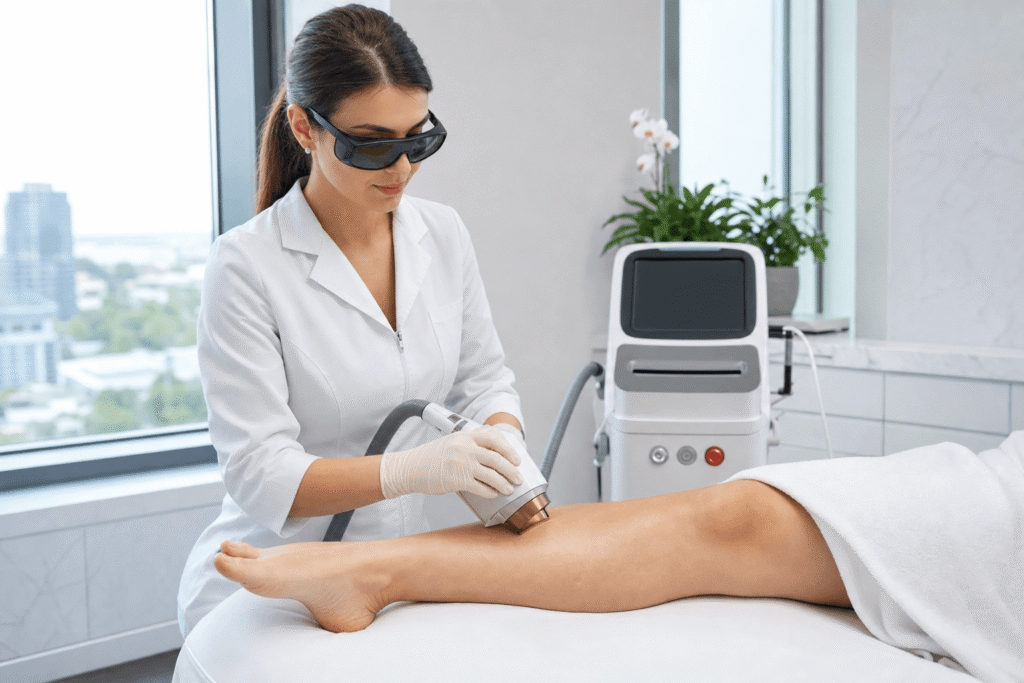
If you’re dealing with painful varicose veins in Ontario, understanding whether is laser treatment for varicose veins covered by OHIP can make a significant financial difference in your treatment journey. OHIP does cover certain laser treatments for varicose veins, but only when they meet strict medical necessity criteria, leaving many patients to pay out-of-pocket for procedures deemed cosmetic.
This guide breaks down exactly what OHIP covers, the documentation you’ll need, the criteria you must meet, and what to expect if your treatment isn’t covered. We’ll also explore recent 2024 guideline changes that have affected eligibility, the appeal process if you’re denied, and realistic cost expectations for laser vein treatments across Ontario.
While Samar Skin Care Clinic specializes in laser hair removal, facials, and advanced aesthetic treatments at our North York location, this article serves as an educational resource to help Ontario residents navigate OHIP coverage for medical vascular procedures.
Quick Answer
OHIP covers endovenous laser therapy (EVLT) and radiofrequency ablation (RFA) for varicose veins when deemed medically necessary due to venous insufficiency, chronic pain, or ulceration. Cosmetic treatments and procedures without documented medical necessity are not covered.
Is Laser Treatment for Varicose Veins Covered by OHIP?
Yes, but with important limitations. OHIP coverage for varicose veins applies specifically to endovenous laser therapy (EVLT) and certain other ablation techniques when a vascular surgeon or qualified physician determines the treatment is medically necessary. The keyword here is medical necessity, not cosmetic improvement.
Ontario’s public health insurance doesn’t cover vein treatments pursued purely for appearance. If your primary concern is how your legs look rather than physical symptoms like pain, swelling, or skin changes, you’ll likely be paying privately. This distinction trips up many patients who assume all varicose vein procedures qualify for coverage.
OHIP-covered treatments typically include endovenous laser ablation (EVLA), radiofrequency ablation (RFA), and in some cases, surgical ligation and stripping when conservative measures have failed. These procedures target the underlying venous insufficiency causing the varicose veins, not just the visible surface veins.
The approval process involves documented evidence of your condition’s severity, failed conservative treatment attempts, and confirmation through duplex ultrasound imaging that you have significant venous reflux. Without this documentation chain, even painful varicose veins may not qualify for OHIP funding.
Key Takeaways
- Verify medical necessity documentation before pursuing OHIP-funded laser vein treatment
- Expect to complete conservative treatments like compression therapy before approval
- Budget $1,500-$4,500 per leg if your treatment doesn’t qualify
- Request duplex ultrasound imaging to confirm venous insufficiency diagnosis
- Ask your vascular specialist about OHIP billing codes E743 and E744 specific to your procedure
- Explore private insurance options if OHIP denies your initial claim
OHIP Coverage Criteria: What Qualifies as Medically Necessary Treatment
The Ontario Health Insurance Plan defines medical necessity for varicose vein treatment through specific clinical criteria that go well beyond simply having visible bulging veins. Understanding these requirements upfront can save you months of frustration and unexpected costs.
Venous Insufficiency and Medical Necessity Requirements
Chronic venous insufficiency (CVI) forms the foundation of most OHIP-approved vein treatments. This condition occurs when the valves in your leg veins fail to push blood back toward your heart efficiently, causing pooling and increased pressure in the superficial veins.
To qualify, you typically need documented evidence of at least one of these conditions: persistent leg pain or heaviness that interferes with daily activities, chronic swelling (edema) that doesn’t resolve with elevation, skin changes like hyperpigmentation or lipodermatosclerosis, active or healed venous ulcers, superficial thrombophlebitis, or bleeding from varicose veins.
A duplex ultrasound examination is mandatory. This imaging study must demonstrate significant venous reflux, typically defined as reverse blood flow lasting longer than 0.5 seconds in the saphenous veins. The ultrasound report becomes a critical piece of your OHIP approval documentation.
Conservative Treatment Requirements Before OHIP Approval
OHIP requires documented failure of conservative management before approving invasive procedures. This means you must attempt and document non-surgical treatments over a specific period, typically three to six months, before laser therapy becomes an option.
Conservative treatments include medical-grade compression stockings (20-30 mmHg or higher), leg elevation protocols, regular exercise programs, and weight management if applicable. Your physician must document that you’ve complied with these measures and that they’ve failed to adequately control your symptoms.
Recent 2024 OHIP guideline updates have introduced stricter requirements for patients under 40 without severe symptoms. The changes emphasize documented quality-of-life impact measured through standardized symptom questionnaires rather than symptom presence alone. The conservative treatment period may now extend to six months for younger patients without skin changes or ulceration, up from the previous three to four month requirement.
While we specialize in aesthetic laser treatments rather than medical vein procedures, we often see clients concerned about visible surface veins on the face and legs. Understanding the difference between cosmetic concerns and medical conditions helps set realistic expectations about what insurance covers versus what requires private payment.
Types of Varicose Vein Treatments and OHIP Coverage Status
Not all varicose vein treatments receive equal consideration from OHIP. The coverage landscape divides sharply between procedures targeting major venous insufficiency and those addressing cosmetic concerns or smaller vessels.
OHIP-Covered Treatments (EVLT, EVLA, RFA)
Endovenous laser therapy (EVLT) and endovenous laser ablation (EVLA) represent the same procedure under different names. Both use laser energy delivered through a thin fiber inserted into the diseased vein, heating and sealing it from the inside. When medically necessary criteria are met, OHIP covers this procedure through qualified vascular specialists.
Radiofrequency ablation (RFA) works similarly but uses radiofrequency energy instead of laser light to heat and close the vein. OHIP also covers RFA when performed for medically necessary venous insufficiency. Some patients tolerate RFA better than laser treatment, though outcomes are comparable.
Traditional surgical stripping, where the diseased vein is physically removed through small incisions, remains OHIP-covered despite being less commonly performed today. Microphlebectomy, the removal of surface varicose veins through tiny punctures, may be covered when performed alongside a covered ablation procedure to treat the underlying reflux.
Non-Covered Cosmetic Procedures (Sclerotherapy, VenaSeal)
Sclerotherapy, where a solution is injected into veins to make them collapse and fade, is not covered by OHIP for cosmetic purposes. Even when spider veins or small varicose veins cause minor discomfort, OHIP typically classifies sclerotherapy as cosmetic unless part of a broader medically necessary treatment plan.
VenaSeal, the newer cyanoacrylate adhesive (medical glue) treatment, is not currently covered by OHIP despite being approved by Health Canada. This procedure offers advantages like no need for compression stockings post-treatment and no heat-related risks, but patients must pay entirely out-of-pocket, typically $3,000 to $5,000 per leg.
Ready to get started?
Book a consultation with Samar to discuss your skin concerns and find the right treatment plan for you.
Documentation, Referrals, and OHIP Billing Requirements
Successfully navigating OHIP coverage for varicose vein treatment requires understanding the administrative requirements and documentation chain that supports your claim.
Required Referral Documentation
You’ll need a referral from your family physician to see a vascular surgeon or qualified specialist who performs endovenous procedures. The referral should include your symptom history, documentation of conservative treatment attempts with dates and durations, any relevant medical imaging, and a clear statement about how the varicose veins impact your quality of life.
Your duplex ultrasound examination must be performed by an accredited vascular lab and interpreted by a qualified physician. The report must specifically document venous reflux duration, which veins are affected, and the severity of insufficiency. OHIP billing code G579 covers diagnostic venous ultrasound studies when medically indicated.
OHIP Billing Codes for Varicose Vein Procedures
Once the vascular specialist determines you meet medical necessity criteria, they’ll schedule your procedure and submit the appropriate OHIP billing codes. Common procedure codes include E743 (endovenous ablation of great saphenous vein), E744 (endovenous ablation of small saphenous vein), and G323 (surgical stripping when required). These codes are updated periodically, so verify current codes with your specialist’s billing office.
Keep copies of all documentation: your referral letter, ultrasound reports showing reflux measurements and affected veins, specialist consultation notes documenting failed conservative treatments, and any correspondence regarding OHIP approval. This paper trail becomes essential if you need to appeal a denial or if insurance questions arise later.
Cost and Pricing for Varicose Vein Treatment in Ontario
The financial aspect of varicose vein treatment in Ontario varies dramatically based on OHIP eligibility, creating very different experiences for patients with medically necessary conditions versus those seeking cosmetic improvement.
OHIP-Covered Treatment Costs
For patients meeting OHIP’s medical necessity criteria, the entire endovenous laser ablation procedure costs nothing out-of-pocket when performed by physicians accepting OHIP billing. This includes the initial consultation with the vascular specialist (with valid referral), pre-procedure duplex ultrasound, the EVLT or RFA procedure itself, and follow-up visits and imaging.
However, even with OHIP coverage, you may face costs for prescription compression stockings (typically $60-$150 per pair), medications not covered under provincial drug programs, and any time off work during recovery. Total incidental costs usually remain under $200.
Private-Pay Treatment Costs in Ontario
Without OHIP coverage, laser varicose vein treatment costs vary significantly across Ontario based on clinic location, physician experience, and treatment complexity. The table below outlines typical private-pay costs for various varicose vein procedures in the Toronto and North York area:
| Treatment Type | Cost Range | Notes |
|---|---|---|
| Initial consultation and ultrasound | $200-$400 | May be waived with treatment package |
| EVLT per leg (great saphenous vein) | $1,800-$3,500 | Toronto/North York area pricing |
| Additional vein treatment (same leg) | $800-$1,500 | Per additional vein requiring ablation |
| Bilateral treatment (both legs) | 10-20% discount | Compared to individual leg pricing |
| Sclerotherapy session | $300-$600 | 2-4 sessions typically required |
| VenaSeal (adhesive closure) | $3,000-$5,000 | Per leg, not OHIP covered |
| Microphlebectomy (cosmetic) | $1,000-$2,000 | Standalone cosmetic procedure |
| Compression stockings | $60-$150 | Per pair, required post-treatment |
Direct Cost Comparison: OHIP vs Private Payment
A patient qualifying for OHIP coverage pays $0 for the procedure itself, plus approximately $100-$200 for compression stockings and incidental costs. The same patient seeking treatment without OHIP coverage pays $2,000-$4,000 for single-leg EVLT or $4,000-$7,000 for bilateral treatment including consultations, ultrasounds, and follow-up care.
If you require additional cosmetic sclerotherapy for surface veins after EVLT, those costs apply equally whether your initial EVLT was OHIP-covered or private-pay, typically adding $600-$2,400 total for multiple sessions. This creates a hybrid situation where medically necessary underlying treatment may be covered while cosmetic surface vein treatment requires private payment.
Private Insurance and Financing Options
Many employer-sponsored health plans through insurance companies like Manulife, Sun Life, or Canada Life offer partial coverage for medically necessary varicose vein treatments not covered by OHIP. Coverage typically ranges from 50% to 80% of eligible expenses up to annual maximums, often $500 to $2,000 per year.
Medical financing companies like Medicard and PayBright offer payment plans for cosmetic and elective medical procedures. Interest rates and terms vary, typically ranging from 0% promotional financing for 6-12 months to standard rates of 8-15% for longer terms. Health spending accounts (HSAs) through employers often cover varicose vein treatments, providing a tax-efficient way to pay for care.
What to Do If OHIP Denies Coverage: Appeals and Alternative Funding
OHIP denials for varicose vein treatment happen frequently, particularly in borderline cases where symptoms exist but don’t meet strict severity thresholds. Understanding your options when denied helps you make informed decisions about next steps.
Understanding Why OHIP Denies Coverage
Common denial reasons include insufficient documentation of conservative treatment failure, symptoms not meeting severity thresholds, imaging not demonstrating significant venous reflux (less than 0.5 seconds of reflux), or the procedure being deemed cosmetic rather than medically necessary. Request a detailed explanation of the denial from your vascular specialist’s office to understand which criteria weren’t met.
The OHIP Appeal Process
The formal appeal process starts with your physician requesting a review of the denial through OHIP’s physician services channels. Your role is providing additional documentation of symptoms, quality-of-life impact, and treatment compliance to support your physician’s appeal submission. Include symptom diaries documenting pain levels, swelling patterns, and activity limitations over several months.
Gather additional supporting evidence such as updated ultrasound imaging showing progression, photographs documenting skin changes or ulceration, and letters from other healthcare providers confirming symptom impact. The appeal timeline typically extends 6-12 weeks from submission to decision. Success rates vary depending on the strength of additional evidence provided. If your appeal is denied, you’ve exhausted OHIP options and must explore alternatives.
Alternative Funding Pathways
Private insurance claims through employer health plans often provide partial reimbursement for medically necessary treatments. Submit your medical documentation, specialist reports, and ultrasound results along with your claim to maximize approval chances. Contact your insurance provider before treatment to confirm coverage levels and pre-authorization requirements.
Health spending accounts (HSAs) and flexible spending arrangements offer tax-advantaged payment options if available through your employer. These accounts allow you to use pre-tax dollars for eligible medical expenses not covered by OHIP. Medical financing companies provide payment plans ranging from interest-free promotional periods to longer-term financing at standard rates.
Some vascular clinics offer in-house payment plans that allow you to spread costs over several months without third-party financing. Ask about available options when discussing private-pay treatment. Community health programs and hospital foundations occasionally provide assistance for medically necessary procedures, particularly for patients facing financial hardship.
Recovery, Success Rates, and What to Expect After EVLT
Understanding the recovery process and expected outcomes helps you plan for treatment timing and set appropriate expectations, whether proceeding through OHIP coverage or private payment.
Immediate Post-Procedure Recovery
Endovenous laser therapy is minimally invasive, performed under local anesthesia. The procedure typically takes 45-90 minutes depending on how many veins require treatment. Most patients walk immediately after treatment and go home the same day.
Post-procedure compression stocking use is mandatory. You’ll wear medical-grade compression stockings continuously for the first 48-72 hours, then during daytime hours for typically two to three weeks. Mild bruising, tightness, and discomfort along the treated vein are normal and usually resolve within 7-10 days. Over-the-counter pain medication manages discomfort effectively for most patients.
Return to Normal Activities
Most patients return to desk work within 1-2 days and physical jobs within 3-5 days. Avoid heavy lifting and intense exercise for one week. Walking is encouraged immediately and helps prevent complications. Most patients resume full normal activities within one week of treatment. Follow-up ultrasound at 1-2 weeks confirms successful vein closure.
Long-Term Success Rates and Outcomes
Success rates for EVLT are high, with studies showing 90-95% of treated veins remain closed at five years post-treatment. Symptom improvement occurs in most patients, with reduced pain, swelling, and heaviness within weeks of the procedure. Visible vein appearance improves gradually over 3-6 months as the body absorbs the closed vein.
New varicose veins can develop in different locations even after successful treatment, particularly if underlying risk factors persist. About 10-15% of patients require additional treatment for new vein issues within five years. Maintaining healthy weight, regular exercise, and using compression stockings during long periods of standing can reduce recurrence risk. Annual follow-up with your vascular specialist helps catch new problems early.
Frequently Asked Questions
Is varicose vein treatment covered by OHIP in Ontario?
Yes, OHIP covers endovenous laser therapy (EVLT) and radiofrequency ablation (RFA) when deemed medically necessary due to chronic venous insufficiency causing symptoms like persistent pain, swelling, skin changes, or ulceration. You must have documented failure of conservative treatments and duplex ultrasound confirming significant venous reflux to qualify.
What are the OHIP coverage criteria for medically necessary vein treatments?
OHIP requires documented chronic venous insufficiency with symptoms affecting quality of life, duplex ultrasound evidence of venous reflux exceeding 0.5 seconds, and documented failure of at least three to six months of conservative management including compression stockings and leg elevation. Simply having visible varicose veins without these medical indicators does not meet OHIP’s coverage threshold.
Do I need a doctor’s referral for OHIP-covered varicose vein treatment?
Yes, you need a referral from your family physician to see a vascular surgeon or specialist who performs endovenous procedures. The referral should document your symptom history, conservative treatment attempts, and how the condition impacts your daily life. Without a proper referral, you cannot access OHIP-covered specialist care.
How much does laser treatment for varicose veins cost in Ontario without OHIP?
Private-pay endovenous laser ablation typically costs $1,800 to $3,500 per leg in the Toronto and North York area. Additional costs include consultation and ultrasound ($200-$400), treatment of multiple veins ($800-$1,500 per additional vein), and sclerotherapy for surface veins ($300-$600 per session). Total treatment costs often range from $3,000 to $6,000 depending on treatment extent.
How long is the recovery after endovenous laser treatment (EVLT)?
Most patients walk immediately after EVLT and return to desk work within 1-2 days. You must wear compression stockings continuously for 48-72 hours, then during daytime for two to three weeks. Physical jobs typically require 3-5 days off work. Avoid heavy lifting and intense exercise for one week. Most patients resume normal activities within one week of treatment.
Understanding Your Options for Varicose Vein Treatment in Ontario
Navigating OHIP coverage for varicose vein treatment requires understanding the distinction between medically necessary procedures and cosmetic improvements. When your condition meets strict medical necessity criteria with documented venous insufficiency, failed conservative treatments, and significant symptoms, OHIP covers endovenous laser therapy and radiofrequency ablation completely. For cosmetic concerns or borderline cases, private payment becomes necessary, with costs ranging from $3,000 to $6,000 for comprehensive treatment.
If OHIP denies your initial claim, the appeal process and alternative funding pathways including private insurance, health spending accounts, and medical financing provide options to access treatment. Understanding the documentation requirements, referral process, and OHIP billing codes helps you navigate the system more effectively.
While Samar Skin Care Clinic specializes in laser hair removal, laser treatments for skin concerns, and advanced aesthetic procedures rather than medical vascular treatments, we understand the importance of helping Ontario residents access accurate information about medical procedures and insurance coverage.
If you’re interested in learning more about the aesthetic laser and skin treatments we offer at our North York location, book a consultation with Samar at 5409 Yonge St, Unit 210, or call (647) 764-8424. We’re here to help you achieve your skin care goals through evidence-based treatments tailored to your unique needs.
