
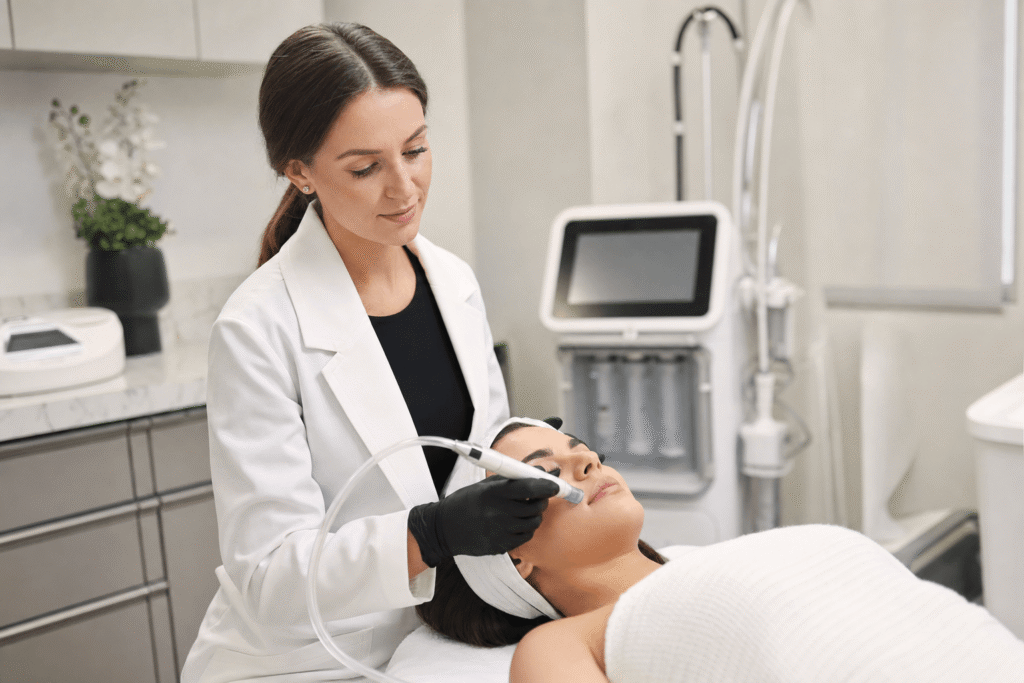
SQT Bio Microneedling is an advanced skin resurfacing treatment that uses natural siliceous spicules extracted from freshwater sponges to create thousands of microchannels in the skin, stimulating collagen production and cellular renewal without traditional metal needles. Unlike conventional microneedling devices, this treatment relies on bio microneedles that remain active in the skin for 48 to 72 hours, triggering a prolonged healing response that addresses acne scarring, hyperpigmentation, fine lines, and uneven texture. For those researching traditional microneedling treatments, understanding how SQT bio microneedling differs in mechanism, recovery, and results helps you make an informed decision about which approach suits your skin concerns and lifestyle.
This guide covers the science behind sponge spicules microneedling, the treatment process from consultation through recovery, expected results timelines, contraindications, cost analysis, and detailed comparisons with traditional microneedling, chemical peel treatments, and laser resurfacing to help determine whether SQT bio microneedling aligns with your skin goals.
Quick Answer
SQT Bio Microneedling uses natural siliceous spicules from freshwater sponges to create microchannels that stimulate collagen production and cellular turnover. These bio microneedles remain active for 48 to 72 hours, providing prolonged skin renewal benefits compared to traditional needle-based devices. Expect 3 to 6 sessions at $250 to $600 each, with 3 to 5 days of redness and peeling.
Key Takeaways
- Expect siliceous spicules to remain active in skin for 48 to 72 hours post-treatment
- Choose SQT bio microneedling for prolonged collagen stimulation versus single-session puncture treatments
- Avoid this treatment if you have active acne, rosacea, or healing skin conditions
- Budget for 3 to 6 sessions spaced 4 weeks apart for optimal skin resurfacing results
- Verify spicule purity percentage and freshwater source before booking your first treatment session
What Is SQT Bio Microneedling?
SQT Bio Microneedling is a professional skin resurfacing treatment that applies a specialized serum containing millions of microscopic siliceous spicules derived from freshwater sponges. These natural bio microneedles penetrate the skin’s surface when massaged into treatment areas, creating controlled micro-injuries that trigger the body’s wound-healing cascade.
The treatment differs fundamentally from mechanical microneedling devices. Instead of a pen or roller with metal needles, practitioners apply a thick, gel-like formula containing purified sponge spicules. Each spicule measures between 50 and 200 micrometers in length. Once embedded, they remain in the skin for two to three days before naturally dissolving.
How SQT Bio Microneedling Works: The Science of Sponge Spicules
Sponge spicules are structural elements that form the skeleton of freshwater sponges, composed primarily of silicon dioxide (silica). Freshwater sponge species like Spongilla lacustris produce siliceous spicules rather than the calcareous spicules found in some marine sponges. This silicon dioxide composition makes freshwater sponge spicules more effective than synthetic alternatives because the naturally irregular surface creates optimal micro-trauma while the biocompatible silica composition integrates smoothly into skin tissue without foreign body reactions.
When applied to the skin surface, these microscopic siliceous fragments penetrate through the stratum corneum and into the living epidermis, typically reaching 0.1 to 0.3 millimeters into the tissue. Once embedded, the spicules trigger three distinct biological responses. First, the physical presence of foreign material activates the skin’s inflammatory cascade, releasing growth factors that initiate tissue repair. Second, the irregular surface of each spicule creates microscopic abrasions along the channel walls, amplifying the wound-healing response. Third, as the spicules slowly dissolve over 48 to 72 hours, they release silicon compounds that enhance fibroblast activity and collagen synthesis.
SQT Bio Microneedling vs Traditional Microneedling
The fundamental distinction between SQT bio microneedling and traditional microneedling lies in the penetration mechanism and duration of skin stimulation. Traditional microneedling uses sterile metal needles arranged in a pen, roller, or stamp configuration to create precise punctures at controlled depths, typically 0.5 to 2.5 millimeters depending on treatment goals. These needle-based devices create clean channels that begin contracting within minutes and substantially close within 4 to 6 hours.
SQT bio microneedling creates shallower penetration, usually 0.1 to 0.3 millimeters, but the spicules remain active in the tissue for 48 to 72 hours. This extended timeline means the inflammatory healing cascade continues for days rather than hours. Pain levels vary significantly. Traditional microneedling at depths beyond 1.0 millimeter typically requires topical anesthetic cream for client comfort. SQT bio microneedling penetrates more superficially and usually doesn’t require numbing, though clients report a sandpaper-like sensation during application and lingering prickling for hours afterward.
| Treatment Aspect | SQT Bio Microneedling | Traditional Microneedling |
|---|---|---|
| Penetration Depth | 0.1-0.3 mm (superficial) | 0.5-2.5 mm (variable) |
| Active Duration | 48-72 hours | 4-6 hours |
| Anesthetic Required | Usually no | Often yes (depths >1.0 mm) |
| Downtime | 3-5 days redness, peeling | 1-3 days redness, minimal peeling |
| Treatment Interval | 4-6 weeks | 4-6 weeks |
During SQT bio microneedling applications at our North York clinic, we adjust massage direction and pressure based on skin laxity and thickness. Clients with thin, sensitive skin see better results with gentler circular motions, while those with acne scarring or thicker tissue benefit from firmer, linear application patterns that drive deeper spicule penetration.
What to Expect: Treatment Process, Pain Level, and Recovery Time
An SQT bio microneedling session begins with thorough skin cleansing to remove makeup, oils, and surface debris. The treatment involves applying the spicule-containing gel to treatment areas and massaging it into the skin using firm, consistent pressure. The sensation differs from traditional microneedling’s rapid-fire poking. Instead, clients report feeling like fine sandpaper or thousands of tiny prickles being worked into the skin.
Application time varies by treatment area. A full-face session typically takes 20 to 30 minutes of active massage time. Most clients describe SQT bio microneedling as moderately uncomfortable rather than painful. The discomfort continues after your appointment ends. As spicules remain embedded in your skin, you’ll experience persistent prickling, tingling, or warmth for 12 to 48 hours.
Expect visible redness for 3 to 5 days following treatment. The intensity peaks within 12 to 24 hours, giving your skin a sunburned appearance that gradually fades to pink. Peeling typically begins around day 3 or 4 as the accelerated cell turnover sheds damaged surface cells. The peeling phase usually resolves within 5 to 7 days. Most clients can return to professional settings by day 4 or 5 with mineral makeup covering residual pinkness.
Benefits and Skin Concerns Treated with SQT Bio Microneedling
SQT bio microneedling effectively addresses multiple skin concerns through prolonged collagen stimulation and accelerated cellular turnover. The treatment improves acne scarring, particularly rolling and shallow boxcar scars, as the extended inflammatory response gradually elevates depressed tissue over multiple sessions. Hyperpigmentation responds well to the accelerated exfoliation, which sheds pigmented cells faster than normal skin turnover cycles.
Fine lines and textural irregularities improve as new collagen formation plumps the skin and smooths surface imperfections. The treatment enhances overall skin brightness and tone by removing dull, damaged surface cells while promoting fresh cell growth. Large pores appear refined as collagen remodeling tightens surrounding tissue. Sun damage including rough texture and uneven tone gradually improves through the resurfacing process.
The key benefits include natural-looking results that develop gradually over weeks, manageable downtime compared to aggressive laser treatments, suitability for most skin types when performed by experienced practitioners, and versatility in treating multiple concerns simultaneously. Unlike single-mechanism treatments, the combination of physical exfoliation, prolonged inflammation, and silicon compound release creates comprehensive skin renewal.
SQT Bio Microneedling Aftercare and Results Timeline
Proper aftercare significantly impacts both your comfort during healing and the quality of your final results. For the first 24 hours, avoid touching your face unnecessarily. Cleanse gently with lukewarm water and a mild, fragrance-free cleanser starting the evening of your treatment. Pat dry with a clean towel, never rub or scrub. Moisturize frequently with a bland, non-comedogenic product. Sun protection is critical. Apply a broad-spectrum mineral sunscreen with zinc oxide or titanium dioxide every 2 hours during daylight exposure.
Avoid heat exposure for 48 to 72 hours, including hot showers, saunas, steam rooms, and intense exercise that raises your core temperature. Do not pick, scratch, or manually remove peeling skin. Let the exfoliation process complete naturally.
| Product Category | Recommendation | Avoidance Period |
|---|---|---|
| Retinoids | Avoid completely | 7-10 days minimum |
| Alpha Hydroxy Acids | Avoid completely | 7 days |
| Beta Hydroxy Acid | Avoid completely | 7 days |
| Vitamin C Serums | Avoid completely | 7-10 days |
| Benzoyl Peroxide | Avoid throughout healing | Until complete healing |
| Hyaluronic Acid | Use for hydration | Safe immediately |
| Ceramide Moisturizers | Use for barrier repair | Safe immediately |
| Mineral Sunscreen | Required daily | Use from day 1 |
Results emerge gradually over several weeks following treatment. Immediate improvements in skin texture and brightness appear once peeling completes around day 7. Deeper changes from collagen remodeling develop over 4 to 6 weeks as new structural proteins mature. Most clients notice continued improvement for 8 to 12 weeks after a single session. Peak results from a treatment series typically manifest 4 to 6 weeks after your final session.
Maintenance varies by individual goals and skin condition. Some clients achieve their desired improvement with 3 sessions spaced 4 to 6 weeks apart, then maintain results with quarterly or bi-annual touch-up treatments. Others with more significant concerns may need 6 initial sessions followed by maintenance every 3 to 4 months.
Who Should Not Get SQT Bio Microneedling: Contraindications and Safety
SQT bio microneedling creates controlled skin injury, making it inappropriate for certain individuals and conditions. Active skin infections absolutely contraindicate treatment, including bacterial infections like impetigo, viral conditions such as active cold sores or herpes simplex, and fungal infections affecting treatment areas. Active acne presents a relative contraindication. While the treatment can help acne scarring, applying spicules over active inflammatory lesions can spread bacteria and worsen breakouts.
Rosacea requires careful consideration. Mild rosacea without active inflammation may tolerate very gentle SQT bio microneedling, but moderate to severe cases often experience significant flares from the prolonged inflammatory stimulation. Alternative treatments like specialized laser therapy typically provide better outcomes for rosacea management.
Keloid or hypertrophic scarring history makes any form of controlled skin injury risky. Individuals who form excessive scar tissue in response to minor wounds may develop raised scars at treatment sites. Pregnancy and breastfeeding represent precautionary contraindications. While no evidence suggests SQT bio microneedling harms developing babies, the lack of safety studies means most practitioners avoid treatment during pregnancy and lactation.
Autoimmune conditions affecting skin healing, such as lupus or scleroderma, can unpredictably respond to microneedling treatments. Recent isotretinoin use requires a waiting period of 6 to 12 months after completing the medication before any microneedling treatment. Blood thinning medications like aspirin, warfarin, or clopidogrel increase bruising and bleeding risk. Always disclose all medications and health conditions during your consultation to ensure treatment safety.
Cost-Benefit Analysis: SQT vs Traditional Microneedling Over 6-12 Months
SQT bio microneedling typically costs $250 to $600 per session depending on geographic location, practitioner experience, and treatment area size. Full-face treatments at reputable medical aesthetics clinics average $400 per session. Traditional microneedling runs slightly less at $200 to $500 per session, averaging $350 for comparable full-face treatment.
For a 6-month treatment plan, SQT bio microneedling requires 4 initial sessions (one every 4-6 weeks) plus one maintenance treatment in month 6, totaling 5 sessions at $2,000. Traditional microneedling follows the same schedule at $1,750 for 5 sessions. The cost difference of $250 over 6 months reflects the enhanced exfoliation and prolonged active period SQT provides.
Over 12 months, SQT bio microneedling costs $2,800 (4 initial sessions plus 3 quarterly maintenance treatments totaling 7 sessions). Traditional microneedling runs $2,450 for the same 7-session schedule. The $350 annual difference positions SQT as a moderate upgrade for patients seeking more aggressive resurfacing than traditional microneedling without the higher cost of laser or RF treatments.
Value considerations extend beyond price. SQT bio microneedling offers stronger exfoliation benefits compared to traditional microneedling, making it more effective for textural concerns and stubborn pigmentation. However, traditional microneedling provides shorter downtime (1-3 days versus 3-5 days) and deeper collagen stimulation when performed at appropriate depths (1.5-2.5mm), making it superior for deeper acne scars.
Choose SQT bio microneedling when you prioritize surface renewal, can accommodate 3 to 5 days of visible redness quarterly, and want stronger results than light chemical peels without investing in laser treatments. Choose traditional microneedling when you need deeper collagen remodeling for significant scarring, prefer shorter visible downtime, or want the flexibility of adjustable needle depths targeting specific concerns.
Ready to get started?
Book a consultation with Samar to discuss your skin concerns and find the right treatment plan for you.
Frequently Asked Questions
What is SQT Bio Microneedling and how does it work?
SQT Bio Microneedling uses natural siliceous spicules extracted from freshwater sponges to create microchannels in the skin. These bio microneedles penetrate 0.1 to 0.3 millimeters deep and remain active for 48 to 72 hours, triggering prolonged collagen production and cellular renewal that improves texture, reduces scarring, and addresses pigmentation.
How does SQT Bio Microneedling differ from traditional microneedling?
Traditional microneedling uses metal needles that penetrate 0.5 to 2.5 millimeters and create channels that close within 4 to 6 hours. SQT bio microneedling uses sponge spicules that penetrate 0.1 to 0.3 millimeters and remain embedded for 48 to 72 hours, providing prolonged inflammatory stimulation with 3 to 5 days of redness versus 1 to 3 days for traditional methods.
How many SQT Bio Microneedling sessions are recommended for best results?
Most clients need 3 to 6 sessions spaced 4 to 6 weeks apart for optimal results. Mild texture issues may improve with 3 sessions, while moderate acne scarring typically requires 5 to 6 initial treatments followed by maintenance every 3 to 6 months.
What is the recovery time after SQT Bio Microneedling treatment?
Expect 3 to 5 days of visible redness that resembles moderate sunburn, peaking within 12 to 24 hours. Peeling begins around day 3 or 4 and completes by day 7. Most clients can return to work by day 4 or 5 with mineral makeup. You’ll experience persistent prickling for the first 48 hours as spicules remain active.
Can SQT Bio Microneedling treat acne scars, hyperpigmentation, and aging skin?
Yes, SQT bio microneedling addresses all three concerns. Prolonged collagen stimulation gradually elevates depressed acne scars, particularly rolling and shallow boxcar types. Hyperpigmentation improves through accelerated cellular turnover. Aging skin benefits from new collagen formation that reduces fine lines and improves texture.
Is SQT Bio Microneedling safe for all skin types?
SQT bio microneedling is generally safe for all Fitzpatrick skin types when performed by trained practitioners. Darker skin types require conservative application and strict sun protection to minimize post-inflammatory hyperpigmentation risk. Individual factors like active skin conditions and medication use matter more than skin type in determining candidacy.
What products should I avoid after SQT Bio Microneedling?
Avoid retinoids for 7 to 10 days, alpha hydroxy acids and beta hydroxy acids for 7 days, vitamin C serums for 7 to 10 days, and benzoyl peroxide throughout healing. Skip products with alcohol, fragrance, or physical exfoliants. Use gentle cleansers and bland moisturizers containing hyaluronic acid, ceramides, or centella asiatica until healing completes.
How much does SQT Bio Microneedling cost compared to other treatments?
SQT bio microneedling costs $250 to $600 per session, averaging $400. A 12-month plan with 4 initial sessions plus quarterly maintenance totals $2,800. Traditional microneedling runs $2,450 for the same schedule. The $350 annual difference reflects enhanced exfoliation benefits and prolonged collagen stimulation SQT provides.
Making the Decision: Is SQT Bio Microneedling Right for You?
SQT bio microneedling offers more aggressive resurfacing than superficial chemical peels but requires less downtime than deep microneedling or laser procedures. The treatment works best for patients seeking gradual, natural-looking improvement rather than dramatic transformation. The best candidates typically include people in their late 20s through 40s addressing early aging signs, individuals with acne scarring who have tried topical treatments without sufficient improvement, and those dealing with stubborn pigmentation.
Your lifestyle matters significantly. The 3 to 5 day recovery period with visible redness may not suit professionals who cannot take downtime. Conversely, people with flexible schedules often find the downtime manageable and worth the results. Cost-conscious planning improves value. Rather than committing to a full treatment series upfront, consider starting with a single session to evaluate your skin’s response and satisfaction with initial results.
Ready to determine whether SQT bio microneedling suits your skin concerns? Samar brings over 10 specialized certifications and extensive experience with advanced resurfacing treatments to each consultation. Her medical aesthetics background, CNTAA credentials, and patient-centered approach ensure you receive honest guidance about the most effective treatment path for your individual needs.
Schedule your consultation at Samar Skin Care Clinic to discuss your skin goals and explore whether SQT bio microneedling or an alternative approach will deliver the results you’re looking for. The clinic is located at 5409 Yonge St, Unit 210, North York, ON M2N 5R6, or call (647) 764-8424 to speak with the team about booking your personalized skin assessment.
