
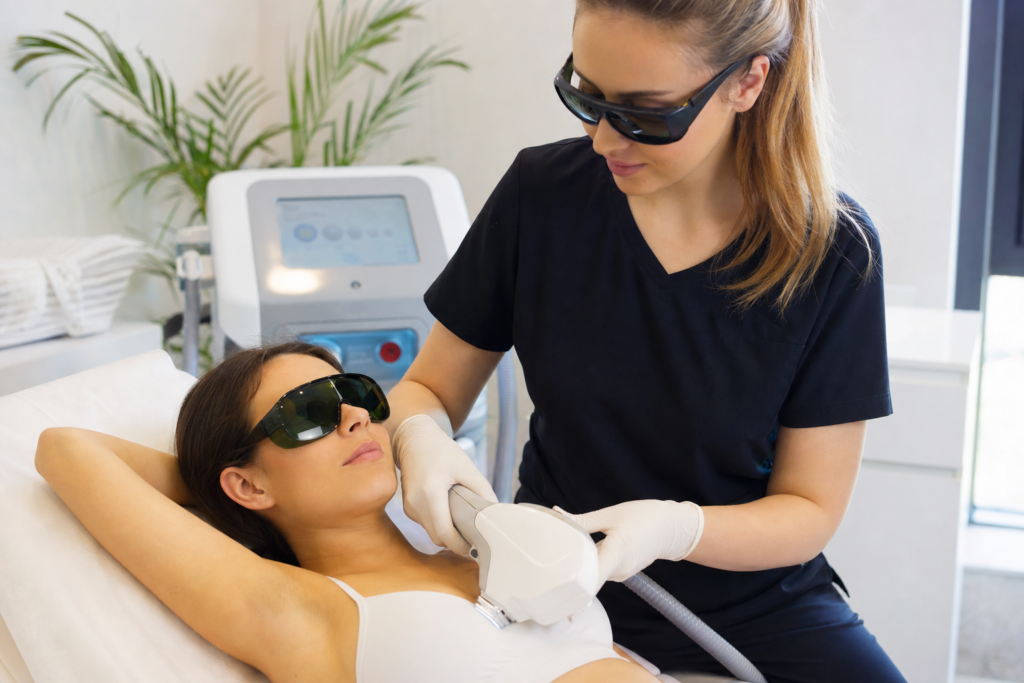
Wondering if can hair laser removal cause cancer is one of the most common questions that comes up during initial consultations, and it makes sense. Anytime you hear the word “laser” or “radiation,” it’s natural to think about potential long-term health risks. But here’s what might surprise you: the type of light energy used in laser hair removal operates on an entirely different part of the electromagnetic spectrum than the radiation known to cause cancer. The confusion often stems from lumping all forms of radiation together, when in reality, visible light, radio waves, and ionizing radiation are vastly different.
After performing hundreds of treatments on clients with different skin tones and hair types, I’ve found that once people understand the science behind how these devices work, their concerns shift from “will this harm me” to “how many sessions will I need.” At Samar Skin Care Clinic, Samar conducts a thorough consultation before every treatment, addressing safety questions and explaining exactly which wavelengths will be used based on individual Fitzpatrick skin type and hair color. This isn’t just reassurance, it’s part of the protocol she developed through her CNTAA training in 2020 and refined through over ten certifications in laser safety and medical aesthetics.
This article breaks down what the research actually says, how laser technology works at the cellular level, and what safety measures protect your skin during every session.
Understanding Radiation Types: Why Laser Light Is Non-Ionizing
Not all radiation is created equal. The electromagnetic spectrum includes everything from radio waves to gamma rays, and only certain types carry enough energy to damage DNA. Ionizing radiation, which includes X-rays, gamma rays, and ultraviolet rays, has enough energy to knock electrons off atoms and break chemical bonds. This is the type associated with cancer risk.
Laser hair removal devices emit non-ionizing radiation. They use wavelengths between 694 nm and 1064 nm, which fall into the visible and near-infrared spectrum. To put that in perspective, these are the same general wavelengths emitted by your TV remote or a standard light bulb, just concentrated and controlled.
When Samar calibrates the laser settings at her North York clinic, she adjusts the wavelength, fluence (energy per pulse), and pulse duration to target melanin in the hair follicle without affecting surrounding tissue. The laser energy converts to heat when absorbed by the pigment, disrupting the follicle’s ability to grow hair. But this thermal process doesn’t alter DNA or create the kind of cellular damage linked to carcinogenesis.
Multiple studies have confirmed this distinction. A 2019 review in the Journal of Clinical and Aesthetic Dermatology analyzed over 30 years of laser hair removal use and found no statistically significant increase in skin cancer rates among patients who underwent treatment. The authors specifically noted that non-ionizing light lacks the photon energy required to initiate mutagenic changes.
What Decades of Clinical Research Reveal About Cancer Risk
Laser hair removal has been commercially available since the mid-1990s, giving researchers three decades of clinical data to analyze. If there were a carcinogenic link, we’d expect to see patterns emerging in long-term follow-up studies. We don’t.
A comprehensive 2021 meta-analysis published in Dermatologic Surgery reviewed data from over 12,000 patients who received laser hair removal treatments across various body areas. Researchers tracked participants for up to 15 years post-treatment. The incidence of basal cell carcinoma, squamous cell carcinoma, and melanoma in this group matched general population rates, with no elevation attributable to laser exposure.
Another study focused specifically on facial laser hair removal, where sun exposure and skin sensitivity are already heightened concerns. Even in this higher-risk area, no increase in precancerous lesions or skin malignancies was observed after an average of 8.3 treatment sessions.
It’s worth noting that some clients come in with existing moles or pigmented lesions in treatment areas. Standard protocol, which Samar follows meticulously at Samar Skin Care Clinic, involves mapping and photographing these spots before starting sessions. Any lesion that looks irregular gets referred to a dermatologist for evaluation first. This isn’t because the laser would cause cancer, but because treating over an undiagnosed melanoma could mask warning signs or alter its appearance, delaying diagnosis.
How Laser Hair Removal Technology Actually Works on Your Skin
Understanding the mechanism helps clarify why cancer risk isn’t a concern. Laser hair removal relies on selective photothermolysis, a principle developed in the 1980s by dermatologists Rox Anderson and John Parrish at Harvard Medical School.
Here’s the simplified version: melanin in your hair follicle absorbs specific wavelengths of light. The laser pulse lasts just milliseconds, long enough to heat the follicle to around 70 degrees Celsius but short enough that surrounding skin stays relatively cool. This targeted destruction damages the follicle’s stem cells, preventing future hair growth.
The laser doesn’t penetrate beyond the dermis. Your hair follicles sit about 3-7 mm below the skin surface depending on body area, and that’s exactly where the energy concentrates. It doesn’t reach deeper structures, organs, or systems. The light gets absorbed, converted to heat, and dissipates.
During treatments at the clinic on Yonge Street in North York, Samar uses cooling methods simultaneously with the laser pulses. Most modern devices have built-in contact cooling or cryogen spray that protects the epidermis while allowing the deeper follicle to reach the necessary temperature. This precision is why you might feel a warm snap during treatment but don’t end up with burns or widespread tissue damage.
Different devices use different wavelengths. Alexandrite lasers (755 nm) work well on lighter skin with dark hair. Nd:YAG lasers (1064 nm) penetrate deeper and are safer for darker skin tones because they’re less absorbed by epidermal melanin. Diode lasers (800-810 nm) fall somewhere in between. None of these wavelengths carry mutagenic potential.
Debunking Common Myths About Laser Safety
Misinformation spreads quickly, especially online. Let’s address the most persistent myths with facts.
Myth: Repeated laser exposure accumulates radiation in your body. This misunderstands how non-ionizing light works. Unlike radioactive materials that emit particles continuously, laser light exists only during the pulse. Once it’s absorbed and converted to heat, it’s gone. There’s no residual radiation, no accumulation, no storage in tissues.
Myth: Lasers can trigger melanoma. Research consistently shows no causal relationship. In fact, some dermatologists use certain laser wavelengths as part of melanoma treatment protocols. The concern likely stems from confusion between correlation and causation, someone discovers melanoma after having laser treatments, but the melanoma was likely present before and simply became noticeable during skin examinations related to the cosmetic procedure.
Myth: Laser hair removal weakens your immune system. There’s no biological mechanism for this to occur. The treatment is purely localized to hair follicles. Your immune system might respond to the controlled injury by sending inflammatory cells to the area, which is actually part of the healing process, but this doesn’t suppress overall immune function.
Myth: Only medical doctors should perform laser treatments. While physician oversight is important, licensed medical aestheticians like Samar, who graduated from CNTAA in 2020 with specialized training in laser physics and skin biology, are fully qualified to perform these treatments safely. The key is proper certification, ongoing education, and adherence to safety protocols.
Real Safety Considerations You Should Actually Think About
While cancer isn’t a concern, laser hair removal does carry real risks if not performed correctly. These are manageable with proper technique and client screening.
Burns represent the most common adverse event, typically resulting from inappropriate settings for a client’s skin tone or recent sun exposure. This is why thorough consultations matter. At Samar Skin Care Clinic, Samar asks about tanning history, medications, and recent sun exposure before every session. Certain antibiotics, anti-inflammatory drugs, and herbal supplements increase photosensitivity, raising burn risk.
Hyperpigmentation or hypopigmentation can occur, especially on darker skin tones, if the laser settings aren’t properly calibrated. Post-inflammatory hyperpigmentation happens when melanocytes respond to thermal injury by producing excess pigment. Using the correct wavelength, appropriate fluence, and adequate cooling prevents this.
Eye protection is non-negotiable. The same light that targets melanin in hair can damage retinal tissue. Every client and practitioner should wear wavelength-specific safety goggles during treatment. This is standard protocol in any legitimate clinic.
Paradoxical hypertrichosis, a rare side effect where treated areas actually grow more hair, occurs in less than 1% of cases. It’s more common on the face and neck, particularly in clients of Middle Eastern or Mediterranean descent. The mechanism isn’t fully understood, but it’s thought to involve sub-therapeutic heating that stimulates dormant follicles rather than destroying active ones.
Scarring is extremely rare with modern devices when used correctly. It typically only occurs with aggressive settings on sensitive areas or when a client picks at scabs formed from burns.
What Makes a Treatment Provider Safe and Qualified
Your provider’s training matters far more than the specific device brand. A qualified practitioner understands skin biology, recognizes contraindications, and knows how to adjust settings for different areas and skin types.
Look for certifications from recognized aesthetic training programs. Samar completed her medical aesthetician training at CNTAA and has earned over ten additional certifications in laser safety, skin typing, and advanced treatment protocols. This level of education means she can identify when a client isn’t a good candidate or when settings need modification mid-session based on skin response.
Experience with diverse skin tones is crucial. Treating Fitzpatrick Type I skin (very fair, always burns) requires completely different parameters than Type V or VI (brown to dark brown, rarely burns). In a diverse city like Toronto, your provider should have extensive experience across the full spectrum. The North York location at 5409 Yonge St serves clients from dozens of ethnic backgrounds, which has given Samar direct experience calibrating treatments for every skin type.
A proper consultation should include a patch test, especially for first-time clients or those with darker skin. This involves treating a small area at the planned settings and checking the skin response 24-48 hours later. It’s the best way to predict how your skin will react and adjust accordingly.
Ask about the specific device being used. Modern machines like the ones at Samar Skin Care Clinic have built-in safety features like skin cooling, melanin readers that help determine skin type objectively, and adjustable parameters that allow fine-tuning. Older or less sophisticated devices lack these protections.
Making an Informed Decision About Your Treatment
Now that you understand the science, you can evaluate laser hair removal based on actual risks rather than unfounded cancer fears. The decision should come down to whether you’re a good candidate, whether your provider is qualified, and whether the benefits align with your goals.
Good candidates have dark hair and lighter skin, though modern technology has expanded the range. Very light blonde, red, or gray hair lacks sufficient melanin for effective treatment. Very dark skin requires specialized wavelengths and careful settings. Hormonal conditions like PCOS can cause hair to regrow even after successful follicle destruction if the underlying hormone imbalance isn’t addressed.
Common treatment areas include Brazilian laser hair removal, underarms, legs, face, and back. Most clients need 6-8 sessions spaced 4-8 weeks apart, depending on the body area and hair growth cycle. Maintenance sessions once or twice a year are common.
Cost varies by treatment area size and the number of sessions needed. While it’s more expensive upfront than shaving or waxing, most clients find the long-term convenience and reduction in ingrown hairs worth the investment.
Results are permanent for most treated follicles, but “permanent hair reduction” is more accurate than “permanent hair removal.” You’ll likely see an 80-95% reduction in hair growth, with remaining hair often finer and lighter. Some follicles can reactivate years later, especially with hormonal changes like pregnancy or menopause.
Frequently Asked Questions
Does laser hair removal increase your risk of skin cancer?
No. Laser hair removal uses non-ionizing radiation that doesn’t have enough energy to damage DNA or cause cellular mutations. Decades of research and clinical use have found no increase in skin cancer rates among people who undergo laser hair removal treatments. The wavelengths used (694-1064 nm) are fundamentally different from the ionizing radiation (like UV rays and X-rays) that is known to cause cancer.
Can you get laser hair removal if you have a history of skin cancer?
Generally yes, but with precautions. If you’ve had skin cancer previously, inform your practitioner during consultation. They’ll examine the treatment area for any suspicious lesions and may request clearance from your dermatologist. The laser itself won’t cause cancer or make existing cancer worse, but treating over an undiagnosed lesion could mask changes that would otherwise signal a problem. Most practitioners will avoid treating directly over scars from previous skin cancer excisions.
Are there any long-term health effects from laser hair removal?
The only long-term effect is the intended one: reduced hair growth. Studies following patients for 15+ years haven’t identified adverse health effects. Some people experience temporary redness, swelling, or pigment changes that resolve within weeks to months. Permanent side effects like scarring are extremely rare and typically result from improper technique or treating over infected or damaged skin.
Is laser hair removal safe during pregnancy?
While there’s no evidence of harm to the fetus, most practitioners recommend postponing treatments until after pregnancy and breastfeeding. This precaution is based on the “better safe than sorry” principle rather than documented risks. Hormonal changes during pregnancy can also affect hair growth patterns, potentially making treatments less effective or causing new hair growth that would require additional sessions later.
How do I know if my laser technician is using safe settings?
A qualified practitioner will conduct a thorough consultation including your medical history, current medications, recent sun exposure, and skin type assessment. They should perform a patch test for first-time clients, explain the settings they’re using and why, and check in with you throughout the session about pain level and skin response. You should see some redness immediately after treatment that resolves within hours to a day. Excessive pain, immediate blistering, or burns indicate settings that are too aggressive.
The science is clear: laser hair removal doesn’t cause cancer. Understanding the distinction between ionizing and non-ionizing radiation, reviewing decades of safety data, and choosing a properly trained provider eliminates the guesswork. Samar’s extensive training through CNTAA and her ten-plus certifications in laser safety and medical aesthetics mean every treatment at Samar Skin Care Clinic follows evidence-based protocols tailored to your unique skin and hair characteristics.
If you’re ready to move forward with laser hair removal in North York, or if you’d like to discuss your specific concerns during a consultation, book an appointment at the clinic. Samar will assess your skin type, answer your questions, and create a treatment plan based on your goals. The clinic is located at 5409 Yonge St, Unit 210, North York, ON M2N 5R6, and you can also reach the team at (647) 764-8424.
